


Lifetime Achievement awards create a strange linguistic problem.
The phrase sounds final.
A life of work is gathered up, summarised and placed into one ceremonial object.
The recipient walks onto a stage and, for a few minutes, an entire career is spoken about in the past tense.
Oskido does not fit comfortably inside that grammar.
Oskido has already begun receiving some of the country’s highest forms of career recognition while remaining visibly connected to the machinery he helped build.
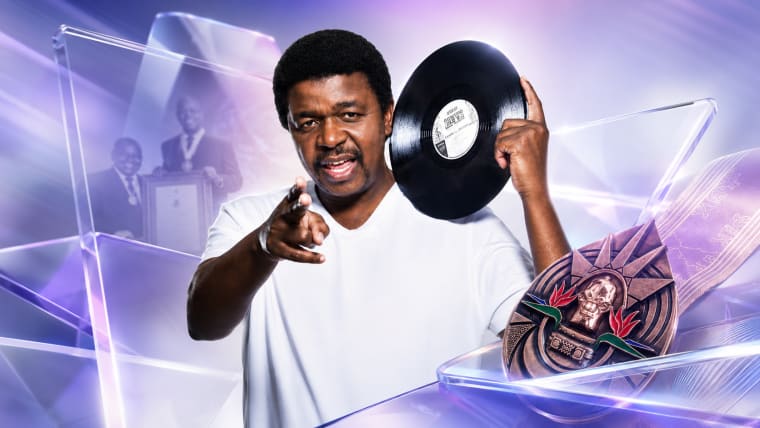
In April 2024, METRO FM presented Oscar “Oskido” Mdlongwa with its Lifetime Achievement Award, recognising a career that the broadcaster described as spanning more than 26 years.
Then, in May 2026, President Cyril Ramaphosa bestowed the Order of Ikhamanga in Silver on him.
The official citation recognised Oskido for creating opportunities for young musicians through his work as a DJ, record producer, entrepreneur and kwaito pioneer.
Those honours would be enough to place almost anybody into South African music history.
Oskido, however, remains attached to an institution that is still operating in the present.
Kalawa Jazmee’s official site identifies the company as a home to generations of artists and groups, including Trompies, Boom Shaka, Mafikizolo, Bongo Maffin, Professor, Uhuru, Zonke, DJ Zinhle, Black Motion, Big Nuz, Busiswa and Vigro Deep.
That list matters because Oskido’s legacy cannot be measured only by the songs attached to his own name.
It also lives in the careers, movements, labels, scenes and industry pathways that formed around the infrastructure he helped build.
That is the more interesting meaning of “lifetime” in his case.
It does not indicate that the work has stopped.
It indicates that enough of the work already exists to measure its historical weight.
Kwaito alone would place Oskido inside an essential chapter of post-apartheid popular culture.
The genre was not only a sound.
It was a language of township modernity, youth expression, democratic transition, street style and local confidence after apartheid.
Oskido’s contribution to that moment sits inside a much larger story about how South African popular music began speaking to itself with new force.
But Kalawa Jazmee expands the argument beyond his personal discography.
A label can outlive a hit.
It can create infrastructure through which other artists become visible, learn the business, release work and eventually create companies, teams and movements of their own.
That kind of influence is harder to represent in a trophy because it spreads through other people’s careers.
It does not always appear in one clean award-night montage.
It appears in the artist who got a first break.
The producer who found a room.
The vocalist who entered a label ecosystem.
The genre that moved from township experimentation into national and continental circulation.
The young musician who discovers that South African sound can be business, culture and export at the same time.
The 2026 Order of Ikhamanga acknowledges precisely that dimension.
Oskido is being honoured not only for records attached to his own name, but for creating opportunity around him.
That is why the recognition feels larger than individual nostalgia.
It is also an acknowledgement of infrastructure.
South African music is often discussed through stars.
The person in front.
The hitmaker.
The performer.
The face on the poster.
But scenes do not survive on stars alone.
They require labels.
Studios.
Mentors.
Networks.
Producers.
Business instincts.
People who understand how to turn musical possibility into repeatable opportunity.
Oskido’s career sits at that intersection.
DJ.
Producer.
Entrepreneur.
Kwaito pioneer.
Label-builder.
Industry elder.
Those identities do not cancel one another.
They explain why the honours have begun arriving while the work still feels active.
There is therefore no contradiction in giving a living, active builder a lifetime honour.
The mistake is assuming that recognition must function as retirement.
A lifetime honour can be retrospective without being terminal.
It can look backwards without closing the future.
It can say: enough has already been done for the country to acknowledge the scale of the contribution.
That does not mean there is nothing left to build.
In Oskido’s case, the grammar of finality does not work.
He is not simply an artist being placed in the museum of South African music.
He is part of the machinery through which South African music keeps producing its next chapters.
That is what makes the current wave of honours meaningful.
They are not asking the industry to say goodbye.
They are asking it to recognise the architecture that has been standing in plain sight for decades.
For Oskido, the award is not a full stop.
It is a marker showing how much road already exists behind somebody who is still moving.

Reporting basis: Based on the Presidency’s official National Orders announcement identifying Oscar “Oskido” Mdlongwa as an Order of Ikhamanga in Silver recipient; the 2026 National Orders booklet’s biography and citation for Oskido; METRO FM’s official 2024 winners announcement confirming his Lifetime Achievement Award; Kalawa Jazmee official site context on the label’s history and artist infrastructure; current reporting on the 19 May 2026 National Orders ceremony; and Viranova editorial analysis of lifetime honours, kwaito legacy, label-building and active cultural infrastructure.
Story index Key points, people & topics
Key points & topics
- Oskido’s major honours do not read like a closing chapter. From the Metro FM Lifetime Achievement Award to the Order of Ikhamanga in Silver, they recognise a builder whose influence is still moving through South African music.
- Oskido’s recent honours do not read like retirement language. They recognise a South African music builder whose influence already carries historical weight while his work remains active.
- Lifetime Achievement awards create a strange linguistic problem.
Credibility & transparency How this story is reported
- Content type
- News
- Verification
- Verified — multiple sources
- Reporting basis
- Based on the Presidency’s official National Orders announcement identifying Oscar “Oskido” Mdlongwa as an Order of Ikhamanga in Silver recipient; the 2026 National Orders booklet’s biography and citation for Oskido; METRO FM’s official 2024 winners announcement confirming his Lifetime Achievement Award; Kalawa Jazmee official site context on the label’s history and artist infrastructure; current reporting on the 19 May 2026 National Orders ceremony; and Viranova editorial analysis of lifetime honours, kwaito legacy, label-building and active cultural infrastructure.
- Sources & context
- This story is based on The Presidency, the 2026 National Orders booklet, METRO FM, Kalawa Jazmee, The Citizen, EWN, Music In Africa and Viranova analysis. The article deliberately avoids the unsupported claim that Oskido is receiving a SAMA32 Lifetime Achievement Award because no authoritative public SAMA32 source confirming that claim surfaced during verification. The stronger documented story is that Oskido has already received high-level career honours while remaining attached to music infrastructure that continues to shape new generations.
- Image
- Oskido I Believe
- Primary source
- thepresidency.gov.za
Edited under our Editorial Standards and How We Report process. Spotted an error? Open the correction form below, or email corrections@viranova.co.za.
Request a correction Accuracy desk
Submit a Correction
Corrections are reviewed by editors and logged with the story record.
Human-written · Editor-reviewed · Corrections open
Filed by Viranova Awards Desk for the Music desk · South Africa. Published 11 Aug 2026.
Respond to this story Reactions, comments, corrections
Respond to this story. Share a comment, a correction, or a right-of-reply — comments open once the room starts talking.