


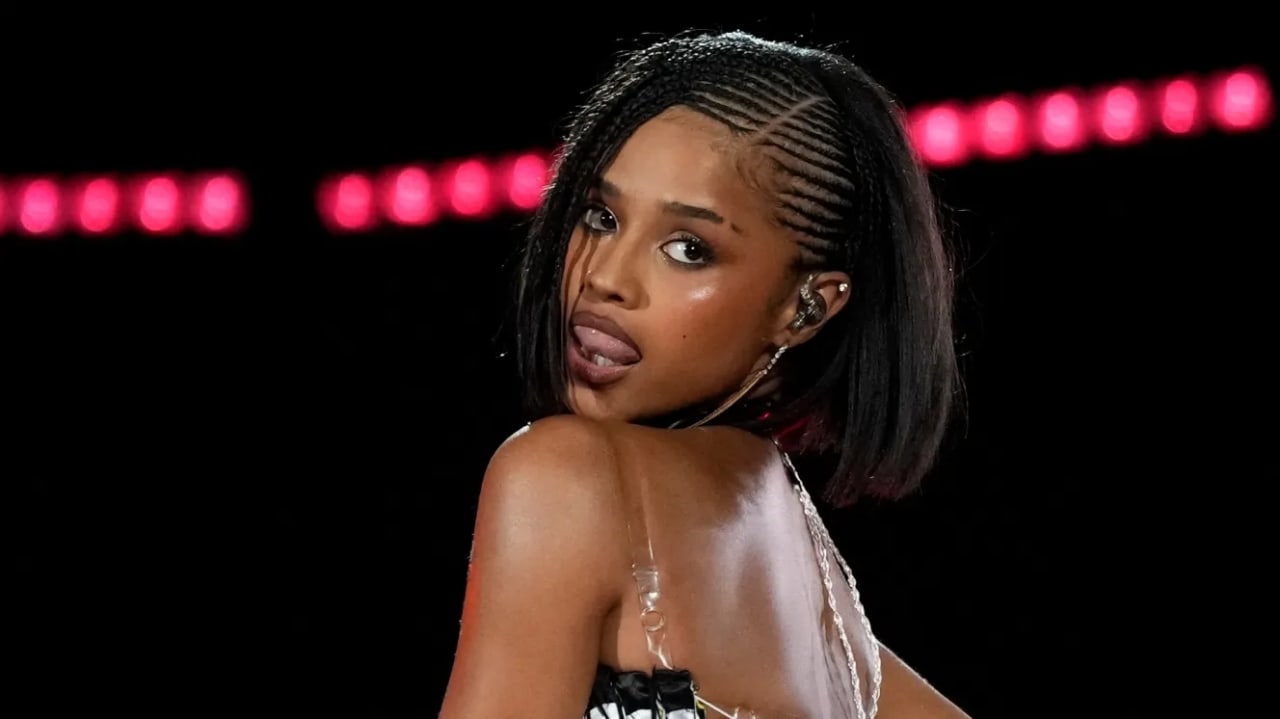
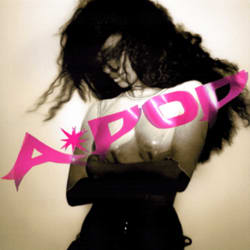
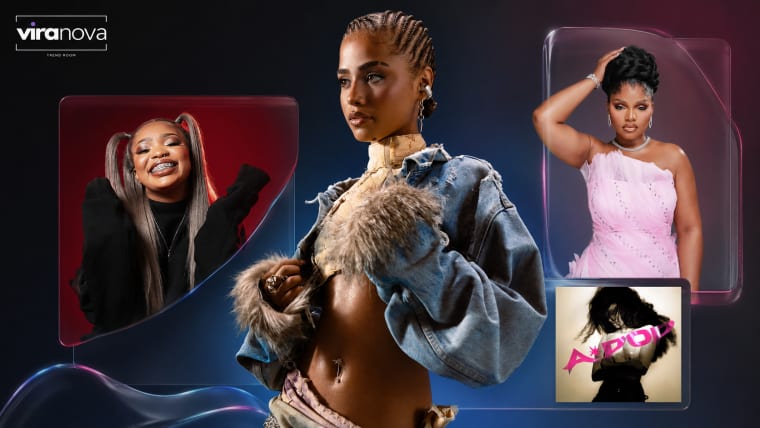
Tyla’s second studio album arrived on 24 July 2026 with a title that functions like a genre label, a branding statement and a provocation.
This story matters because Tyla is no longer introducing herself after a breakout moment. A*POP gives her the space to define what comes after global arrival, while placing South African collaborators, amapiano language, Liquideep lineage and international pop ambition inside the same album architecture.
A*POP.
The 14-track, 44-minute project follows the compressed global rise of her self-titled debut and gives her a more controlled opportunity to define what a South African pop star can sound like after the breakthrough has already happened.
That distinction matters.
Tyla is no longer only the artist who exploded through “Water.”
She is now the artist who has to decide what comes after arrival.
A*POP is the answer she is currently offering.
The title has been presented as African pop, but the record does not behave like a tidy attempt to establish one new genre with fixed rules.
It moves through contemporary R&B, polished international pop, Afrobeats, dancehall accents and the log-drum language associated with amapiano.
The point is not purity.
A*POP is built around Tyla’s ability to make different markets and musical references meet inside the same light, highly controlled vocal presence.
That is where the album’s confidence sits.
Not in rejecting the global pop machine.
In entering it while bringing South African and African musical information into the room.
The album’s collaborators reveal the geography of that strategy.
Zara Larsson appears on “SHE DID IT AGAIN,” a glossy cross-market pop collaboration that Pitchfork placed among its contenders for the 2026 song of the summer.
South African vocalists MaWhoo and Babalwa M appear on “CRAZY OF ME” and “I DON’T CARE.”
Liquideep is credited on “FAIRYTALE,” which reworks the duo’s 2009 song for a generation likely to encounter it first through Tyla.
That tracklist matters.
It does not separate global reach from local lineage.
It places both inside the same album architecture.
Zara Larsson and Liquideep can exist in the same pop universe.
MaWhoo and Babalwa M can sit inside the primary album rather than being pushed into a regional remix package.
A South African house memory can be reintroduced through a global pop star without being treated as an obscure reference.
That is the most interesting thing about A*POP.
It is not simply a question of influence.
It is a question of placement.
Who gets to be inside the main album?
Which sounds are treated as central rather than supplementary?
Which histories become part of the pop statement rather than background decoration?
International criticism has naturally tried to name the mixture.
The Guardian described A*POP through early-2000s pop glamour and a blend of R&B, amapiano, pop and Afrobeats.
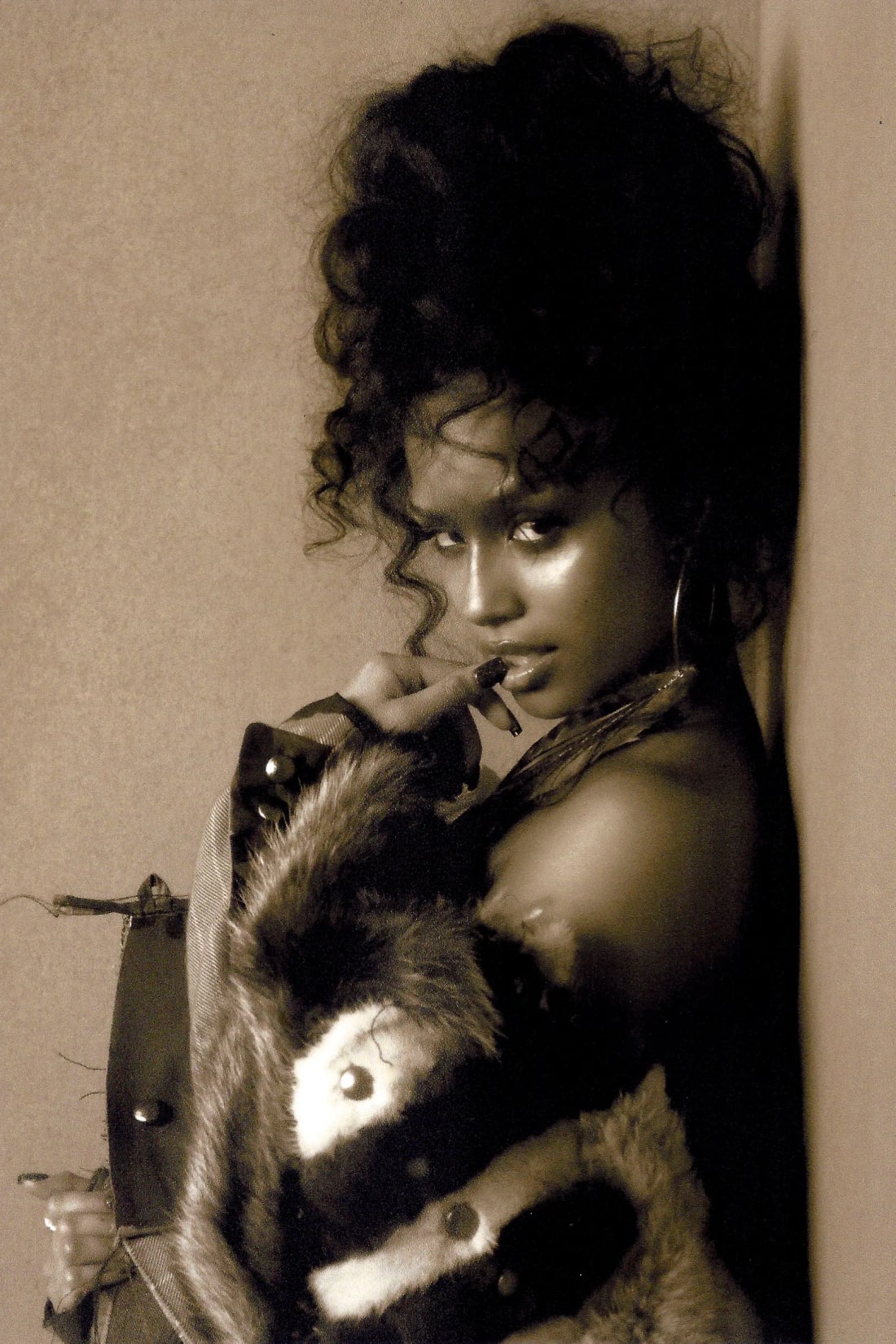
That reading captures the album’s Y2K styling and its interest in an older model of the pop superstar.
Concise songs.
Recognisable looks.
Choreography.
Flirtation.
The sense that an album era should be an entire visual world rather than a folder of streaming files.
Tyla understands that kind of pop theatre.
A*POP does not only want to be heard.
It wants to be styled.
Posed.
Danced.
Photographed.
Quoted.
Performed.
It wants the album to feel like a room with lighting, wardrobe, movement and attitude already built into it.
That is part of the appeal.
But broad genre labels can hide the specific details South African listeners are more likely to recognise.
A log drum is not simply an exotic bass effect.
MaWhoo and Babalwa M do not function only as evidence of African influence.
Liquideep is not a sample source without a history.
These references carry their own audiences, memories and relationships to South African house, amapiano and local listening culture.
The record can be globally accessible while containing information that lands with different weight depending on what the listener already knows.
That difference should not be exaggerated into a claim that South Africans understand the album correctly while international critics do not.
There is no representative evidence for a single local response.
South African audiences are as divided, online, genre-fluid and argument-ready as any others.
Some listeners will hear A*POP as an exciting expansion.
Others may want more risk.
Others may question how far amapiano can be polished before it starts feeling more like texture than engine.
All of those responses can exist.
The more defensible point is that A*POP supports several levels of recognition at once.
One listener hears a polished chorus.
Another hears a lineage.
One review hears Y2K pop glamour.
Another hears the continued negotiation between amapiano’s local grammar and the demands of global radio.
That negotiation is where Tyla’s career has lived from the beginning.
She has never simply made amapiano in the strictest local sense.
She has built a lighter, pop-facing language around it.
A style often described as popiano.
That positioning is both her opportunity and her controversy.
It allows her music to move internationally with unusual ease.
It also invites questions about what gets softened, simplified or translated in the process.
A*POP does not resolve that tension.
It performs inside it.
The 14 songs are notably compact.
Most run for roughly two to four minutes, and the full album sits under 45 minutes.
That economy suits the project’s pop ambition, but it creates pressure.
Every vocal idea, feature and rhythmic switch has to establish itself quickly.
There is little room for indulgence.
That can make the album feel sleek.
It can also make some moments feel as though they pass before they fully open.
The Guardian praised Tyla’s charisma and stylistic movement while identifying weaker points in the sequence.
NME’s early review similarly found charm and polish while suggesting that the album could have gone further.
One day after release, those early reviews are evidence of reception, not a final verdict on the album’s commercial or cultural life.
That distinction is important.
Pop albums change shape after release.
Singles grow.
Choreography reframes songs.
Videos change public perception.
Live performances reveal which tracks have real audience voltage.
TikTok can flatten a song into a soundbite, but it can also extend its life.
Radio, playlists and fan culture will decide which parts of A*POP continue travelling.
So the more useful question is not whether the album has already been fully judged.
It is what kind of pop future Tyla is trying to build through it.
A*POP arrives after Tyla’s first album was created under the acceleration of an unexpected global breakthrough.
In announcing the new record, she described herself as more settled and more certain of her direction.
That confidence is audible in the refusal to choose between South African specificity and international polish.
The album does not ask permission to place Babalwa M, Zara Larsson, MaWhoo and Liquideep in one pop universe.
It simply does it.
That confidence matters because African artists in global pop are often asked to explain themselves twice.
First to prove that their music is authentically local.
Then to prove that it can travel.
Tyla’s answer is less defensive.
She is not treating African pop as a side category waiting to be allowed into pop.
She is arguing that the category itself has already moved.
Global pop is no longer defined from one centre.
It is built through multiple centres.
Johannesburg can be one.
Lagos can be one.
London can be one.
Stockholm can be one.
Amapiano, R&B, Afrobeats, dancehall and Y2K gloss can all appear inside the same commercial object without the album apologising for the mixture.
That does not mean every blend works perfectly.
It does not mean the album is beyond criticism.
It does not mean South African listeners must treat any local reference as automatic victory.
But it does mean the old question is starting to feel too small.
Is it amapiano enough?
Is it African enough?
Is it pop enough?
Those questions still matter, but they are not the whole story.
The more interesting question is whether Tyla can keep those categories in productive tension without one becoming a decorative explanation for the other.
On A*POP, she makes a clear argument.
African pop is not outside global pop.
It is not the flavour added later.
It is not the regional variation.
It is one of the places from which global pop can now be defined.
That is the provocation of the title.
When Tyla says A*POP, she is not only naming an album.
She is naming a position.
Reporting basis: Based on Spotify, Amazon Music and Apple Music album listings for Tyla’s APOP, Pitchfork album-announcement and song-of-summer coverage, The Guardian’s album review, YFM release coverage, The Citizen’s pre-release reporting on Tyla’s APOP framing, and Viranova editorial analysis of African pop, amapiano, South African musical lineage and global pop positioning.
Story index Key points, people & topics
Key points & topics
- Tyla’s second album treats African pop not as the opposite of global pop, but as one of the places from which global pop can now be defined.
- Tyla’s A*POP is not simply trying to prove that she can go global. It argues that African pop is already one of the places where global pop is being redefined.
- Tyla’s A*POP blends R&B, amapiano, Afrobeats and global pop while featuring Zara Larsson, Liquideep, MaWhoo and Babalwa M.
Frequently asked Answers from the desk
When did Tyla release APOP?
Tyla released APOP on 24 July 2026.
How many songs are on APOP?
APOP has 14 songs.
How long is APOP?
The album runs for about 44 minutes.
What does APOP mean?
The title has been presented as African pop, with Tyla framing the project around bringing the “A” to pop.
Who features on Tyla’s APOP?
The album features Zara Larsson, Liquideep, MaWhoo and Babalwa M.
Which APOP song features Zara Larsson?
Zara Larsson appears on “SHE DID IT AGAIN.
” Which APOP song features Liquideep?
Liquideep appears on “FAIRYTALE,” which reworks the duo’s 2009 song for a new generation.
Which APOP songs feature MaWhoo and Babalwa M?
MaWhoo appears on “CRAZY OF ME,” while Babalwa M appears on “I DON’T CARE.
” What genres does APOP move through?
The album moves through R&B, pop, Afrobeats, amapiano textures, dancehall accents and Tyla’s broader popiano language.
Why does APOP matter?
It matters because Tyla uses the album to position African pop as part of the centre of global pop, while carrying South African collaborators and musical references into the main album structure.
How we reported this Sources, verification & accountability
- Reporting type
- Feature
- Verification
- Verified — multiple sources
- Reporter / responsible desk
- Viranova Music Desk
- Primary evidence
- Based on Spotify, Amazon Music and Apple Music album listings for Tyla’s APOP, Pitchfork album-announcement and song-of-summer coverage, The Guardian’s album review, YFM release coverage, The Citizen’s pre-release reporting on Tyla’s APOP framing, and Viranova editorial analysis of African pop, amapiano, South African musical lineage and global pop positioning.
- Additional verification
- This story is based on Spotify, Amazon Music, Apple Music, Pitchfork, The Guardian, YFM, The Citizen and Viranova analysis. Early reviews are treated as first-wave reception, not as a final verdict on the album’s commercial or cultural life.
- Primary source
- music.apple.com
Edited under our Editorial Standards and How We Report process. Spotted an error? Open the correction form below, or email [email protected].
Request a correction Accuracy desk
Submit a Correction
Corrections are reviewed by editors and logged with the story record.
Human-written · Editor-reviewed · Corrections open
Filed by Viranova Music Desk for the Music desk · South Africa / Global. Published 25 Jul 2026.
Culture worth
opening.
Two sharp culture reads a week — no algorithm in between.
Join the conversation React or leave a thoughtful comment
How did this story land?