

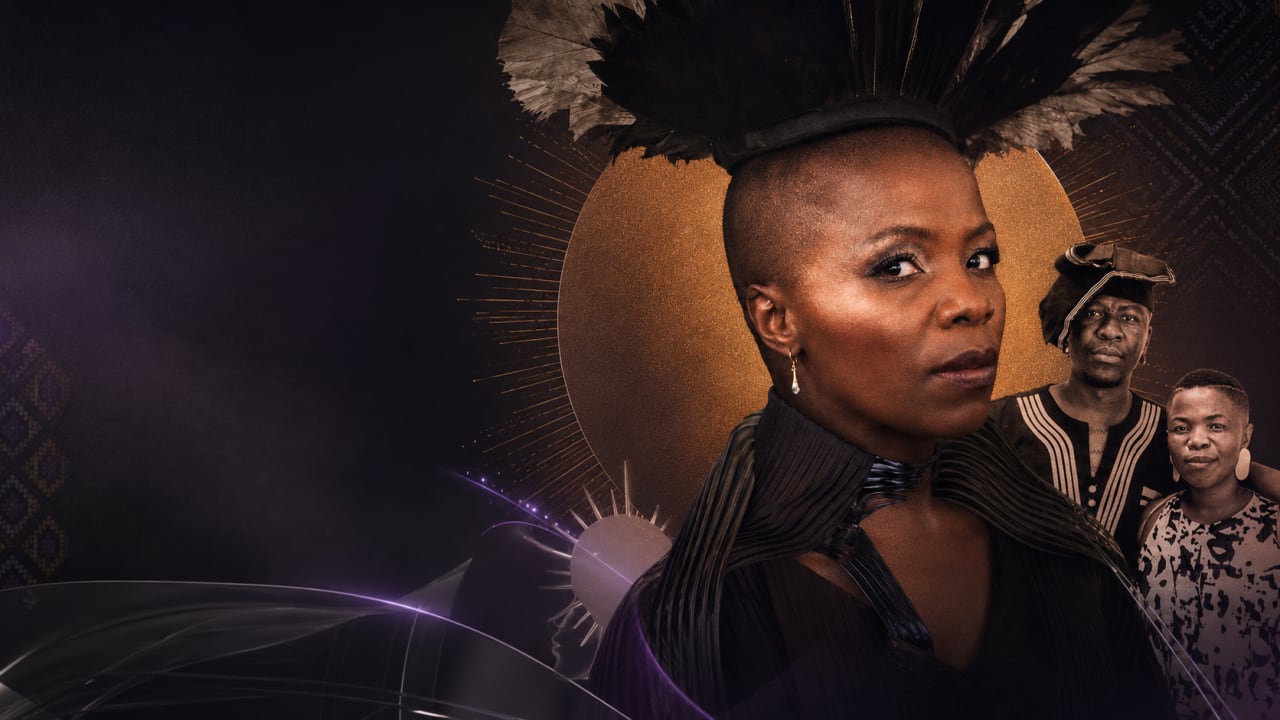
Gqom has often been described in architectural terms.
It is dark. It is concrete. It is subterranean. Born in the bedroom studios of Durban, it is a genre built on pressure, minimalism and movement — the kind of music that rattles your ribcage and demands a physical response.
So when Zolani Mahola released “XhosaNostra” in early June 2026, it felt unexpected.
Mahola, with her soaring vocals, folk-inflected roots and deep storytelling history, stepping into the jagged world of electronic dance music did not seem like an obvious fit.
But “XhosaNostra,” featuring Bravo Le Roux, does something remarkable.
It uses gqom not only as a club language, but as a vessel for heritage and cultural storytelling.
The track feels less like a straightforward peak-time club tool and more like a cultural statement built through gqom’s pulse. Mahola uses the driving rhythm as a kind of contemporary drum, leaning into the genre’s hypnotic qualities while opening space for identity, ancestry and memory.
When Bravo Le Roux brings his Xhosa rap texture into the mix, the song anchors itself firmly in language and place. It bridges urban edge with cultural memory, making the track feel both current and rooted.
It is a fearless move for an artist who could easily rest on the legacy of her Freshlyground years.
Instead, Mahola is leaning into a global partnership and new sonic landscapes. By taking a sound built for dark rooms and using it to carry heritage, she proves that South African electronic music does not always have to be about escaping reality.
Sometimes, it can be about remembering exactly who you are.
Story index Key points, people & topics
Key points & topics
- With “XhosaNostra,” Zolani Mahola uses gqom’s pulse to carry heritage, memory and tribute — proving South African electronic music can be more than a club escape.
- Zolani Mahola’s “XhosaNostra” takes gqom beyond the club, using its hypnotic pulse as a vessel for tribute, Xhosa identity, cultural memory and sonic reinvention.
- Zolani Mahola’s “XhosaNostra” featuring Bravo Le Roux uses gqom as a vessel for Xhosa identity, tribute, heritage and South African electronic storytelling.
Credibility & transparency How this story is reported
Edited under our Editorial Standards and How We Report process. Spotted an error? Open the correction form below, or email corrections@viranova.co.za.
Request a correction Accuracy desk
Submit a Correction
Corrections are reviewed by editors and logged with the story record.
Human-written · Editor-reviewed · Corrections open
Filed by Viranova Music Desk for the Music desk · South Africa. Published 07 Jun 2026.
Respond to this story Reactions, comments, corrections
Respond to this story. Share a comment, a correction, or a right-of-reply — comments open once the room starts talking.