

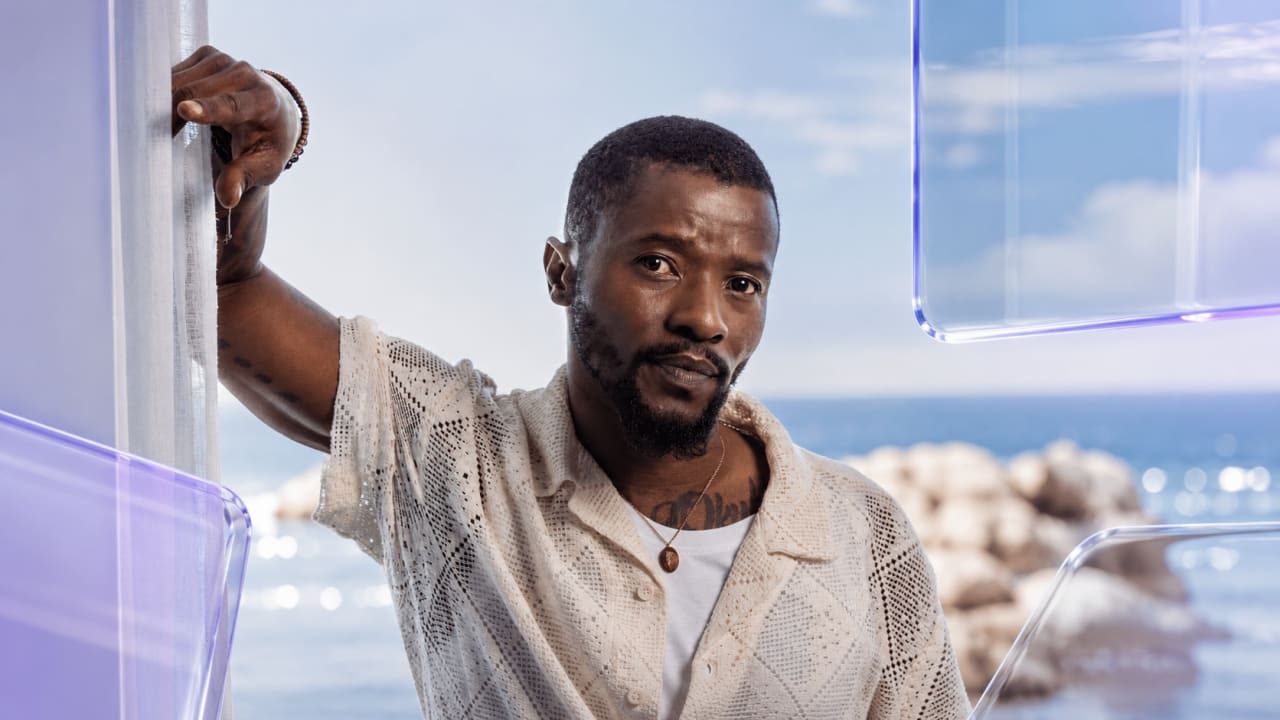
Abdul Khoza thought he might be finished with acting. His return places him inside a character that has been developing for more than a decade.
This story matters because Abdul Khoza’s Uzalo return is not only another casting announcement. It brings an actor who believed he might be finished with acting back into a production rooted near his family history, while transforming a brief early character into a major new force inside the show.
There was a period when Abdul Khoza genuinely believed his acting career might be over.
In a July 2026 interview, Khoza said that time away from performance allowed him to invest in himself, begin writing his own stories and work toward his longstanding goal of establishing an independent production company. He also referred to projects involving collaborators in Zimbabwe and Germany, where his responsibilities extended beyond acting into wardrobe, makeup and directing.
That account is more precise than saying the “relentless grind of television” definitely forced him away. Khoza has spoken about believing he was done and about using the pause constructively, but he did not reduce the decision to one confirmed cause such as burnout or a production conflict.
His screen return arrived through Uzalo on 10 July 2026.
Khoza joined the SABC1 series as Ma-Ten-Ten, leader of the Amantaliyane biker gang. Londeka Sishi plays Lungsta, his foster sister and strategic partner, while Mbuso Zulu later enters the storyline as Cash Money, a fiercely loyal member of the gang.
Ma-Ten-Ten arrives in KwaMashu after Nkunzi’s arrest with the stated objective of seizing the Mhlongo empire. Official character material describes him as charismatic, stylish and dangerously intelligent, using designer clothing, humour and charm to conceal the ruthless criminal beneath the polished presentation. His upbringing in an orphanage shaped a survival philosophy in which loyalty must be earned and people can become expendable.
Those details support the draft’s description of a charming but violent kingpin. Calling him “terrifyingly calculated” remains editorial interpretation, but it is consistent with the official character profile.
The most important factual detail, however, lies in Ma-Ten-Ten’s connection to Khoza’s first Uzalo appearance.
Khoza appeared briefly during the programme’s first season as an idealistic humanitarian doctor. In his 2026 interview, he confirmed that Ma-Ten-Ten is intended to be that same man after a profound transformation. The original doctor believed medicine could heal and uplift his community. According to the backstory Khoza described, the system he trusted eventually destroyed that idealism, leading him to leave medicine, sever ties with his former life and become leader of the Amantaliyane gang.
The original draft was therefore correct about the character continuity. It was imprecise about the timeframe.
Uzalo premiered in February 2015. Khoza’s return in July 2026 came approximately 11 years after the first season began airing, although Khoza himself referred to the interval as 12 years in the interview, possibly reflecting production timing or rounding. “More than a decade later” is the cleanest phrasing.
Khoza said the character surprised him because viewers encounter Ma-Ten-Ten through darkness and violence. He explained that the violence is rooted in betrayal and institutional failure rather than existing without context. From Ma-Ten-Ten’s perspective, the legal and social systems have failed to deliver justice, so he has appointed himself as the person who will impose it.
That does not mean the programme endorses his worldview. Khoza explicitly leaves the moral judgment to the audience. The distinction is important: understanding the experiences used to construct a violent character is not the same as excusing the character’s actions.
The draft’s direct quotations were based on a real interview, but some had been compressed or merged. The most defensible formulation is to paraphrase Khoza’s explanation: Ma-Ten-Ten is violent, charismatic and unexpectedly likeable, but his appeal is built around the contradictions produced by broken dreams.
The role carries personal importance for Khoza beyond its narrative scale. His father was born and raised in KwaMashu, and Khoza described joining a production rooted in that community as a return to his own cultural and familial foundations. He called the experience a “restoration of self,” not specifically a “spiritual restoration.”
His collaboration with Sishi is also part of that renewed energy. Khoza said this was their first time working together and praised her commitment to finding credible human truth inside characters neither actor resembles in ordinary life. That is a more accurate description than claiming she single-handedly transcended “gangster tropes.”
Ma-Ten-Ten’s arrival is therefore doing several things at once.
It returns Khoza to television. It reconnects him with Stained Glass Productions, the company behind Uzalo and other productions in which he has appeared. It turns a small role from the programme’s first season into a long-form character transformation. And it gives his return a connection to KwaMashu, both as the fictional centre of the story and as part of his family history.
Khoza did not merely return to read lines, but the language of “claiming his crown” risks turning a complicated professional return into promotional mythology.
The stronger story is already present: an actor who once believed he might be finished has come back through the same fictional world in which he appeared near the beginning of his career—only now, both the performer and the character carry more history.
Reporting basis: Based on SABC1’s official Uzalo announcement, public reporting from The Citizen, IOL and Daily Sun, TV Mzansi’s interview with Abdul Khoza, public context on Uzalo’s first season and Viranova editorial analysis of character continuity, actor comeback narratives and South African television performance.
Story index Key points, people & topics
Key points & topics
- After believing his acting career might be over, Abdul Khoza has returned to television through Uzalo as Ma-Ten-Ten, a character that connects his comeback to KwaMashu, Stained Glass Productions and a first-season role...
- Abdul Khoza’s return to Uzalo as Ma-Ten-Ten turns a brief first-season appearance into a darker long-form character transformation and a deeply personal acting comeback.
- Abdul Khoza thought he might be finished with acting. His return places him inside a character that has been developing for more than a decade.
Frequently asked Answers from the desk
When did Abdul Khoza return to Uzalo?
Abdul Khoza returned to Uzalo as Ma-Ten-Ten from 10 July 2026.
Who does Abdul Khoza play on Uzalo?
Abdul Khoza plays Ma-Ten-Ten, the leader of the Amantaliyane biker gang.
Who is Ma-Ten-Ten on Uzalo?
Ma-Ten-Ten is a charismatic but dangerous gang leader who arrives in KwaMashu after Nkunzi’s arrest with the aim of taking over the Mhlongo empire.
Is Ma-Ten-Ten connected to Abdul Khoza’s first Uzalo role?
Yes. Khoza has said Ma-Ten-Ten is the same man viewers briefly encountered in Uzalo’s first season as an idealistic doctor, now transformed after disillusionment.
Who plays Lungsta on Uzalo?
Londeka Sishi plays Lungsta, Ma-Ten-Ten’s foster sister and strategic partner.
Who plays Cash Money on Uzalo?
Mbuso Zulu plays Cash Money, a loyal member of the Amantaliyane gang.
Why did Abdul Khoza return to acting?
Khoza has linked his return to the opportunity to work close to home, reconnect with KwaMashu through Uzalo and continue his craft after using time away to write and invest in his own stories.
Why does Abdul Khoza’s Uzalo return matter?
It matters because the role connects his professional comeback, family roots, Stained Glass Productions and a long-form character transformation from the show’s early history.
How we reported this Sources, verification & accountability
- Reporting type
- News
- Verification
- Verified — multiple sources
- Reporter / responsible desk
- Viranova Entertainment Desk
- Primary evidence
- Based on SABC1’s official Uzalo announcement, public reporting from The Citizen, IOL and Daily Sun, TV Mzansi’s interview with Abdul Khoza, public context on Uzalo’s first season and Viranova editorial analysis of character continuity, actor comeback narratives and South African television performance.
- Additional verification
- This story is based on SABC1’s official announcement of Abdul Khoza and Londeka Sishi joining Uzalo, The Citizen and IOL coverage of the Amantaliyane storyline, Daily Sun reporting on Khoza’s acting U-turn and hometown reasons, TV Mzansi’s interview with Khoza about Ma-Ten-Ten’s backstory, and Viranova analysis of how the role connects career return, KwaMashu and character transformation.
- Primary source
- sabc1.co.za
Edited under our Editorial Standards and How We Report process. Spotted an error? Open the correction form below, or email [email protected].
Request a correction Accuracy desk
Submit a Correction
Corrections are reviewed by editors and logged with the story record.
Human-written · Editor-reviewed · Corrections open
Filed by Viranova Entertainment Desk for the Entertainment desk · KwaMashu, South Africa. Published 19 Jul 2026.
Leave with the sharp version of what moved.
Two considered South African culture reads a week. No feed to chase, no noise between them.
Join the conversation React or leave a thoughtful comment
Respond to this story. Share a comment, a correction, or a right-of-reply — comments open once the room starts talking.