

Some music venues survive their closure.
This story matters because live-music rooms carry cultural memory even after the brands that made them famous disappear. Jazz at Jozi Gold cannot recreate The Orbit, but it can reactivate the space by bringing musicians and audiences back into a room that still matters to Johannesburg jazz.
Not necessarily as businesses, brands or names on a building, but as rooms that retain the memory of what happened inside them. The walls remain. The stage occupies the same corner. Musicians remember where they stood, audiences remember what they heard, and an ordinary street address becomes inseparable from a particular period in a city’s cultural life.
For Johannesburg jazz, 81 De Korte Street in Braamfontein is one of those addresses.
The building was once home to The Orbit Live Music and Bistro, which opened in March 2014 and became an important meeting place for South African jazz before financial pressures forced it to close at the beginning of 2019. Its disappearance left more than an empty venue. It removed one of the increasingly rare spaces in which musicians could develop work, test new ideas and build relationships with attentive live audiences.
The Orbit has not returned. But the room has found another life.
Today, the same address houses Jozi Gold Brewing Company, where the Jazz at Jozi Gold programme is bringing live music back to the building on Saturday nights. The series has begun positioning the venue as a meeting point for established South African musicians, emerging performers and audiences searching for a live-music experience within Braamfontein.
Its July programme now presents two artists whose performances carry significance far beyond their appearance on an event calendar.
On Saturday, 18 July, saxophonist and composer Linda Sikhakhane returns to the stage where he first presented himself as a bandleader nine years ago.
“Homecoming” is frequently used as promotional language, even when there is little history behind it. Sikhakhane’s return is more literal. He is coming back to a room connected to an earlier version of his musical life, now carrying the experience of an artist whose work has travelled considerably further.
Since that first bandleader appearance, Sikhakhane has developed a body of work concerned with ancestry, spiritual consciousness and the meeting point between inherited African knowledge and contemporary improvisation. His 2024 album, iLadi, was released through Blue Note and Universal Music Africa, produced by Nduduzo Makhathini and performed with a quartet featuring Makhathini, Zwelakhe-Duma Bell le Pere and Kweku Sumbry.
His return to De Korte Street will offer audiences an early encounter with material from his forthcoming fifth album, the self-titled LINDA. The announced project continues Sikhakhane’s engagement with deep spiritual and sonic ideas while drawing listeners further into the musical world he has been constructing across his recordings.
That makes the evening more than an exercise in nostalgia.
Sikhakhane is not returning simply to reproduce what he performed in the room nearly a decade ago. He is returning with new music, a larger body of experience and a clearer sense of the artistic language that has made him one of the distinctive voices in South Africa’s contemporary jazz generation.
The stage becomes a measuring instrument: the physical location may be familiar, but the artist standing on it has changed.
One week later, on Saturday, 25 July, the room welcomes Vusi Mahlasela.
Mahlasela’s relationship with South African audiences is built on a different form of recognition. Known internationally as “The Voice”, he has spent more than three decades using music as a vessel for storytelling, political memory, reconciliation and hope. His career has included performances and collaborations with artists such as Hugh Masekela, Angélique Kidjo, Sting, Paul Simon and Dave Matthews.
Yet Mahlasela’s cultural weight is not located only in the famous names surrounding his career. It is found in the intimacy of his writing: the ability to translate national questions into songs that still feel personal, lived and emotionally immediate.
His Jozi Gold performance is expected to move between the established catalogue that earned him that recognition and music from his developing Questions and Answers project. Introduced through the title single in November 2025, the project has been described as a new chapter concerned with emotional, spiritual and social questions rather than simple resolutions.
Placing Sikhakhane and Mahlasela on consecutive Saturdays creates an unforced conversation between generations.
Sikhakhane represents an evolving contemporary jazz language—rooted in history but unwilling to remain confined by inherited definitions. Mahlasela represents the enduring power of the singer and storyteller, carrying the emotional record of South Africa’s transition while continuing to ask what freedom, humanity and reconciliation mean in the present.
Their music arrives through different forms, but both artists treat performance as something more consequential than entertainment. For each, sound can become a means of remembering, questioning and locating oneself within a larger cultural inheritance.
That is precisely why the room matters.
Reopening a former jazz venue does not automatically restore the ecosystem that once existed around it. A new name, programme or weekly event cannot simply recreate The Orbit, nor should Jozi Gold be expected to function as a replica of what came before.
The Orbit’s closure was itself a warning: cultural importance does not protect a live-music institution from the financial realities of keeping its doors open. Venues survive through sustained audiences, consistent programming and the difficult balance between artistic purpose and commercial viability.
Jazz at Jozi Gold will therefore be meaningful not because it attempts to preserve the room like a museum, but because it gives the space an active purpose again.
The organisers appear conscious of that responsibility. Spokesperson Glynis Jardine has described the building’s history as one of the reasons audiences are responding to the series: people recognise that they are entering a room that already occupies a place in South African jazz memory.
But memory alone cannot keep a stage alive. It has to be activated repeatedly—with musicians, audiences and new experiences capable of becoming part of the room’s continuing story.
Sikhakhane’s return is one such moment. Mahlasela’s appearance is another.
On 18 and 25 July, audiences will not simply be attending two performances by acclaimed South African musicians. They will be participating in the latest chapter of a room that Johannesburg once lost and is now learning how to use again.
The Orbit is gone.
The address remains.
And, on Saturday nights, the music is beginning to occupy it once more.
Event information
Linda Sikhakhane — Jazz at Jozi Gold
Saturday, 18 July 2026
Doors open: 18:30
Performance: 20:00
Tickets: R350
Vusi Mahlasela — Jazz at Jozi Gold
Saturday, 25 July 2026
Doors open: 18:30
Performance: 20:00
Tickets: R350
Venue: Jozi Gold Brewing Company, 81 De Korte Street, Braamfontein, Johannesburg
Bookings: Quicket
Reporting basis: Based on public reporting on The Orbit’s 2014 opening and 2019 closure, Quicket listings for Linda Sikhakhane and Vusi Mahlasela at Jozi Gold Brewing Company, Time Out Johannesburg coverage of Jazz at Jozi Gold, Blue Note information on Linda Sikhakhane’s iLadi, public event copy for his forthcoming LINDA album preview, and Vusi Mahlasela public artist information.
Story index Key points, people & topics
Key points & topics
- At 81 De Korte Street, Linda Sikhakhane returns to the former Orbit stage where he first presented himself as a bandleader, before Vusi Mahlasela follows with a catalogue that has carried South African memory across the world.
- Jazz at Jozi Gold is bringing live music back to the former Orbit room, with Linda Sikhakhane and Vusi Mahlasela turning 81 De Korte Street into a new chapter of Johannesburg jazz memory.
- Some music venues survive their closure.
Credibility & transparency How this story is reported
- Content type
- Feature
- Verification
- Official source
- Reporting basis
- Based on public reporting on The Orbit’s 2014 opening and 2019 closure, Quicket listings for Linda Sikhakhane and Vusi Mahlasela at Jozi Gold Brewing Company, Time Out Johannesburg coverage of Jazz at Jozi Gold, Blue Note information on Linda Sikhakhane’s iLadi, public event copy for his forthcoming LINDA album preview, and Vusi Mahlasela public artist information.
- Sources & context
- This story is based on Quicket, Time Out Johannesburg, SowetanLIVE, TimesLIVE, Blue Note, Bandsintown event copy, Vusi Mahlasela’s official site and Viranova analysis of venue memory, live jazz infrastructure and cultural continuity in Braamfontein.
- Image
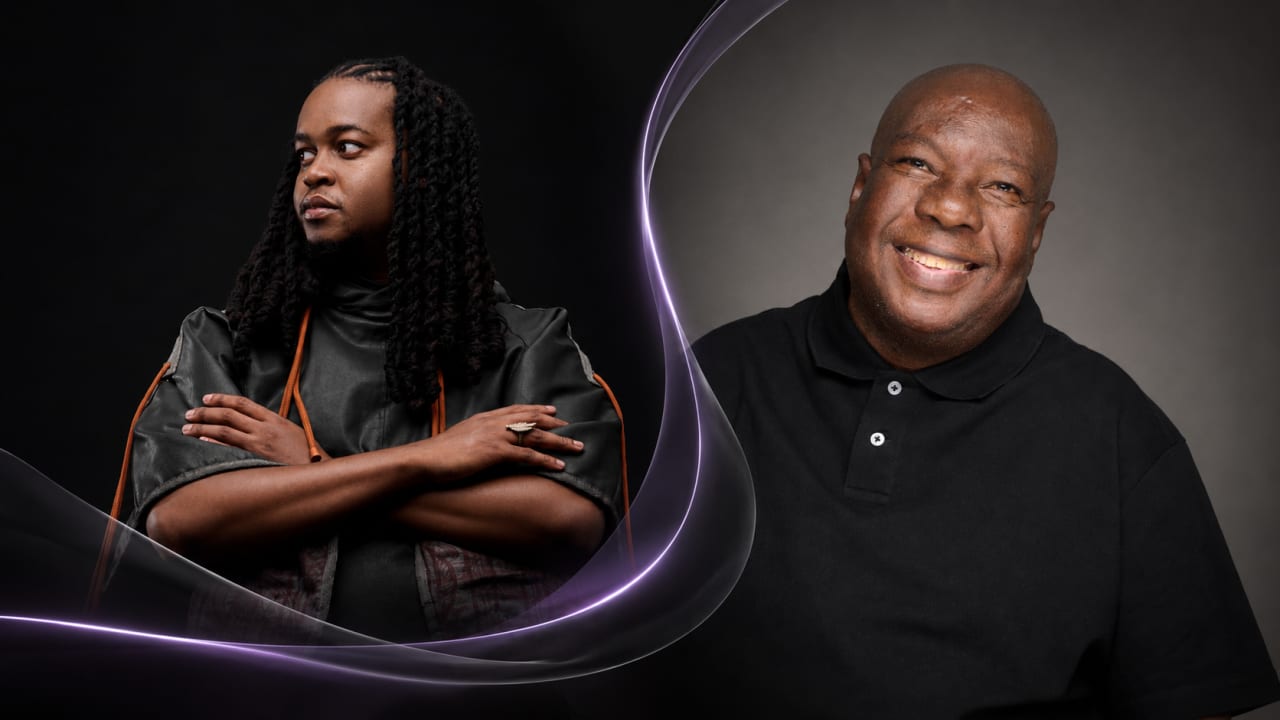
- Original Image by Malwandla Rikhotso (Linda Sikhakhane), Supplied by I Be Music (Vusi Mahlasela)
- Primary source
- quicket.co.za
Edited under our Editorial Standards and How We Report process. Spotted an error? Open the correction form below, or email corrections@viranova.co.za.
Request a correction Accuracy desk
Submit a Correction
Corrections are reviewed by editors and logged with the story record.
Human-written · Editor-reviewed · Corrections open
Filed by Viranova Music Desk for the Music desk · Braamfontein, Johannesburg, South Africa. Published 15 Jul 2026.
Leave with the sharp version of what moved.
Two considered South African culture reads a week. No feed to chase, no noise between them.

Join the conversation React or leave a thoughtful comment
Respond to this story. Share a comment, a correction, or a right-of-reply — comments open once the room starts talking.