

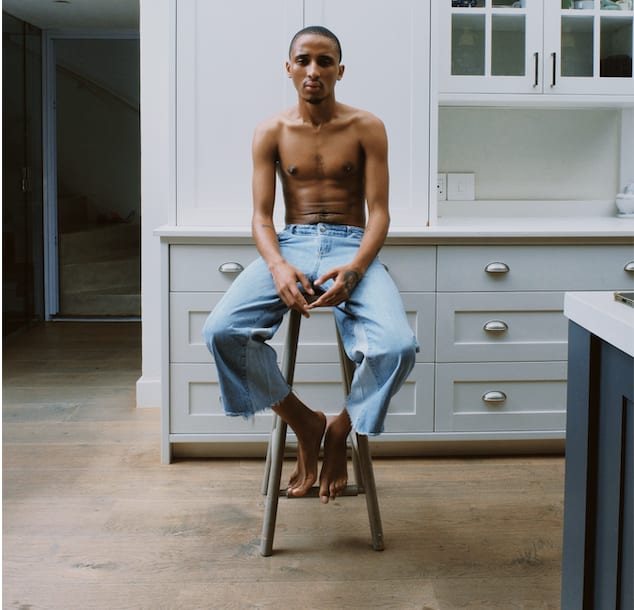
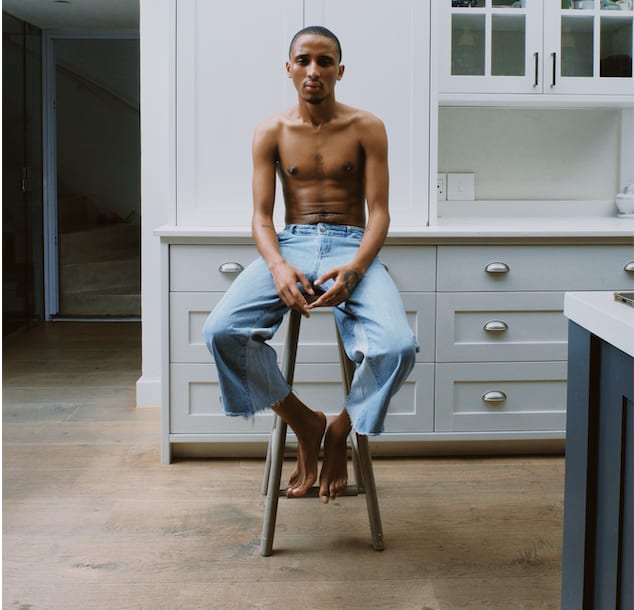
On his new single, Human, Espacio Dios steps away from the noise of ambition and constant movement to consider the love, presence and purpose that make a life meaningful.
There is a particular kind of exhaustion that comes from always moving towards something.
The next opportunity. The next achievement. The next release. The next version of ourselves that we imagine will finally feel complete.
For Espacio Dios, the South African singer-songwriter, producer and multidisciplinary creative born Masego Makganyoha, that endless pursuit forms the emotional centre of his latest single, Human.
The song begins with a deceptively simple question: in building lives around progress, convenience and what comes next, have we forgotten why we are here in the first place?
“Somewhere along the way, we’ve built a world around convenience and, in doing so, we’ve often overlooked the things that give life meaning: love, presence and purpose,” he says.
It is a reflection that feels particularly urgent in a culture where stillness can appear unproductive and where a person’s worth is often measured by how much they have achieved, created or accumulated. Human does not reject ambition entirely. Instead, it asks what ambition costs when it becomes the only language through which we understand our lives.
The song was not created during a carefully planned album session or as part of a tightly managed release schedule. Its beginnings stretch back several years, when Espacio Dios connected with US producer Anoop.
Their relationship began on a human level before it became musical. Among the ideas Anoop shared was a beat built around a simple guitar melody. Espacio Dios did not immediately write over it. For a day or two, he only listened.
Then, he made a decision that would shape the song.
He spent an entire day doing nothing that could conventionally be described as productive. There was no work, no conversation and no distraction. He walked, observed and reflected. Later that evening, he returned home and wrote the lyrics to Human.
The story behind the song matters because it mirrors its central argument. The answer did not arrive while Espacio Dios was chasing it. It emerged when he stopped long enough to notice what was already present.
“Some songs feel like they’re yours,” he says. “Human felt like it belonged to everyone who needed to hear it.”
That distinction transforms the song from a private confession into an invitation. Its questions are personal, but they are not exclusive to the artist. They belong to anyone who has reached a milestone only to discover that achievement does not automatically create fulfilment. They belong to anyone who has stayed busy to avoid confronting grief, doubt, loneliness or uncertainty. They belong to those who have spent so much time preparing for the future that the present has quietly passed them by.
Looking back, Espacio Dios believes Human was not simply a song he chose to write. It was a reminder he needed before he could make DIOS, his forthcoming album set for release on 30 October.
The album represents more than a collection of tracks. Espacio Dios describes it as a document of what he has learned about love, ego, ambition, grief, purpose and becoming.
That word—document—is important.
It suggests that DIOS is not intended to present a perfected version of its creator. It is evidence of a life being examined in real time. It captures the uncomfortable, contradictory and often unresolved experiences that shape a person before they can fully understand what those experiences mean.
“Sometimes understanding ourselves begins by simply feeling what we’ve been avoiding,” he says.
This willingness to sit with difficult emotions appears central to Espacio Dios’s creative philosophy. He is not interested in using music to offer easy solutions or presenting himself as someone who can rescue listeners from their own uncertainty. His hope is quieter and perhaps more meaningful: that the songs create a space in which people can experience themselves more honestly.
That experience may bring joy, grief, love, doubt or hope. What matters is allowing the feeling to exist rather than immediately escaping it.
In that sense, DIOS is not only about what Espacio Dios has survived or understood. It is also about the conversations listeners may have with themselves after hearing it.
“My hope is that people don’t just hear my story; they discover their own through it,” he says.
His approach challenges the way music is often packaged and consumed. Songs are frequently reduced to genres, release dates, playlists, promotional cycles and performance figures. Espacio Dios has never appeared comfortable with those boundaries.
He does not begin by deciding whether a song should become hip-hop, soul, alternative music or something else. He begins with emotion, curiosity and an idea, allowing each song to determine its own form.
“Every song tells me what it wants to become, and my responsibility is simply to follow it honestly,” he says.
Genre, in his view, is not an artistic instruction. It is simply one of the ways people may eventually find the work.
That freedom has defined a career built over approximately a decade, during which Espacio Dios has accumulated hundreds of thousands of streams and a string of radio singles. Yet time in the industry has also sharpened his understanding of what those achievements can and cannot offer.
One of his biggest lessons has been recognising that success and significance are not always the same thing.
Success can be immediate, visible and measurable. It can take the form of numbers, attention and momentum. Significance is slower. It cannot always be captured on a chart or reduced to a campaign report. It is found in whether a song remains with someone after the promotional cycle has ended.
“Trends come and go. Honesty stays,” Espacio Dios says. “I’d rather make something that still means something to someone ten years from now than chase something that only lasts ten days.”
It is an ambitious standard, but not an ambition rooted in speed or scale. It is the ambition to create work with an emotional life beyond its release date.
That may explain why the songs on DIOS have remained with him for years. They were not created to fill a schedule. They emerged when life gave him something worth examining.
“The music isn’t really the work,” he says. “Living is the work. The songs are just evidence that I was paying attention.”
It may be the clearest expression of the philosophy behind Human.
The song does not argue that people should abandon their dreams, reject progress or stop wanting more from their lives. It asks them to pay attention to what is being neglected while they pursue those things.
It asks whether convenience has brought us closer to one another or merely made it easier to avoid being fully present. It asks whether constant productivity is building meaningful lives or protecting us from the feelings we are afraid to confront. It asks whether the next achievement will truly satisfy us if we have not learned how to recognise the value of what we already have.
There are no simple answers.
Instead, Human creates space for the question—and trusts that listening closely may be the beginning of understanding.
For Espacio Dios, that act of attention is where the work begins. Not in the studio, not in a genre and not in the machinery surrounding a release, but in the quieter moments when life reveals something worth saying.
Human is available now. Espacio Dios’s forthcoming album, DIOS, will be released on 30 October.
Reporting basis: Based on supplied press material for Espacio Dios’ “Human,” Apple Music public artist and pre-release information for DIOS, Bubblegum Club profile context on Espacio Dios’ artistic growth and genre-fluid approach, and Viranova editorial analysis of ambition, stillness, emotional honesty and South African alternative music.
Story index Key points, people & topics
Key points & topics
- On his new single, “Human,” Espacio Dios steps away from the noise of ambition and constant movement to consider the love, presence and purpose that make a life meaningful.
- Espacio Dios’ “Human” asks what ambition costs when it becomes the only language through which we understand our lives.
Frequently asked Answers from the desk
Who is Espacio Dios?
Espacio Dios is a South African singer-songwriter, producer and multidisciplinary creative born Masego Makganyoha.
What is Espacio Dios’ new single called?
His new single is called “Human.
” What is “Human” about?
“Human” reflects on ambition, convenience, love, presence, purpose and what people may lose when they are constantly chasing what comes next.
Who produced “Human”?
Supplied press material says the song began from a beat shared by US producer Anoop.
What is Espacio Dios’ forthcoming album called?
His forthcoming album is called DIOS.
When is DIOS scheduled for release?
Apple Music lists DIOS as a pre-release scheduled for 30 October 2026.
What themes shape DIOS?
According to supplied material, DIOS explores love, ego, ambition, grief, purpose and becoming.
How does Espacio Dios approach genre?
Espacio Dios’ approach is genre-fluid, beginning from emotion and curiosity rather than trying to fit each song into one fixed category.
Why does “Human” matter?
It matters because it asks listeners to slow down and reconsider whether success, progress and productivity are meaningful without love, presence and purpose.
Credibility & transparency How this story is reported
- Content type
- Feature
- Verification
- Official source
- Reporting basis
- Based on supplied press material for Espacio Dios’ “Human,” Apple Music public artist and pre-release information for DIOS, Bubblegum Club profile context on Espacio Dios’ artistic growth and genre-fluid approach, and Viranova editorial analysis of ambition, stillness, emotional honesty and South African alternative music.
- Sources & context
- This story is based on supplied press/interview material, Apple Music artist information, Bubblegum Club archive coverage and Viranova analysis. Publicly searchable sources verify Espacio Dios’ artist identity, wider catalogue and DIOS pre-release date, while the “Human” writing process, Anoop collaboration and direct quotations come from supplied material.
- Image
- Credit: NEST Films · Supplied by I Be Music
- Primary source
- music.apple.com
Edited under our Editorial Standards and How We Report process. Spotted an error? Open the correction form below, or email corrections@viranova.co.za.
Request a correction Accuracy desk
Submit a Correction
Corrections are reviewed by editors and logged with the story record.
Human-written · Editor-reviewed · Corrections open
Filed by Viranova Music Desk for the Music desk · South Africa. Published 30 Jul 2026.

Respond to this story Reactions, comments, corrections
Respond to this story. Share a comment, a correction, or a right-of-reply — comments open once the room starts talking.