


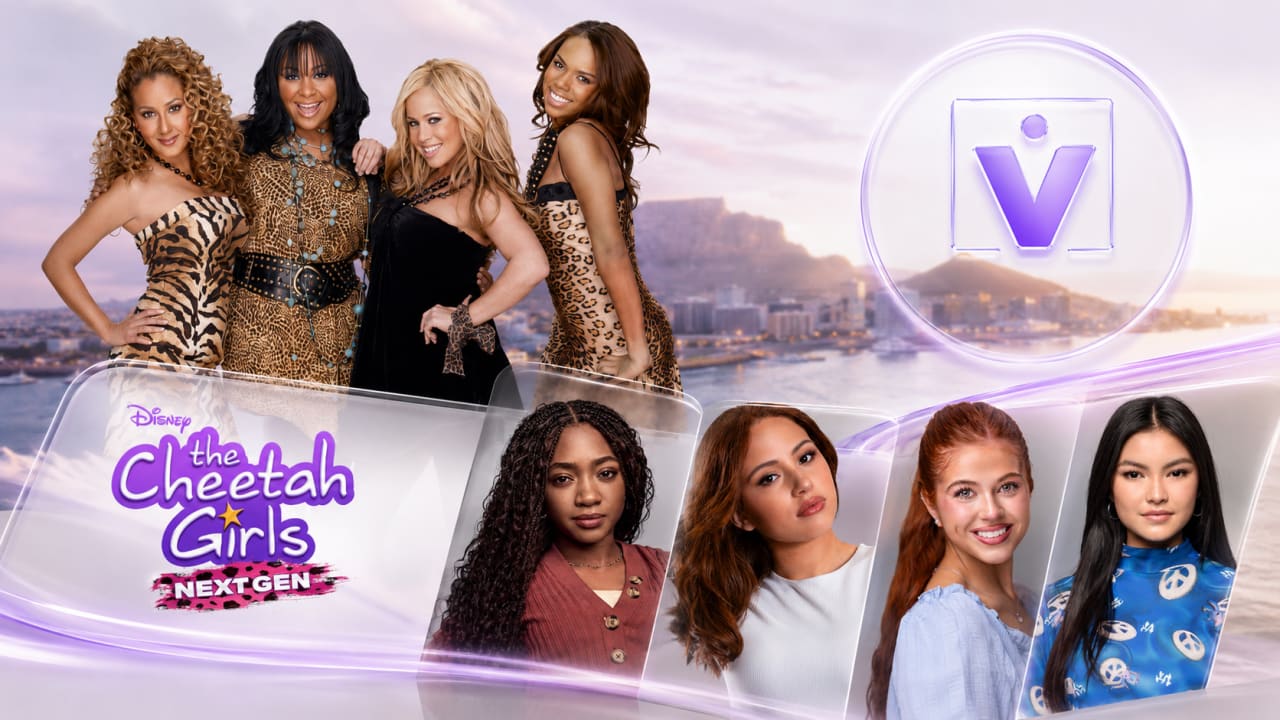
The party is starting again.
This story matters because South Africa is not only being used as a production location. The Cheetah Girls: Next Gen places the country close to the story itself, creating an opportunity for Disney to engage with South African youth culture, performers, music, fashion and screen infrastructure in a way that goes beyond scenery.
But this time, it is starting in Mzansi.
Disney has officially greenlit The Cheetah Girls: Next Gen, a new music-driven continuation of one of the defining pop-cultural franchises of the early 2000s.
Production is now underway in South Africa, with original stars Raven-Symoné and Adrienne Bailon-Houghton returning to the characters that helped turn matching animal print, unapologetic ambition and female friendship into a worldwide phenomenon.
For South African audiences, however, this is not simply another nostalgia revival arriving from Hollywood.
The film is being made here.
Its stars are rehearsing in Cape Town.
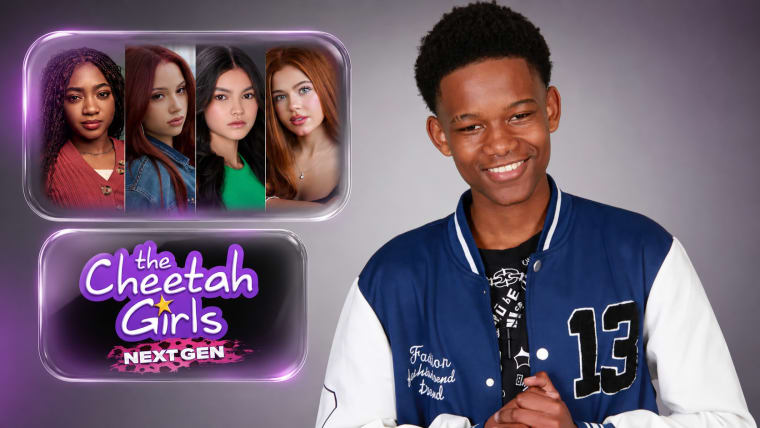
And among its new cast is Kamogelo Ramashala, a South African newcomer selected through Disney’s global open casting call to play a character named Kendi.
In a story built around young women finding their voices, that casting feels particularly fitting.
A local performer has gone from an international open call to a role inside one of Disney’s most recognisable musical worlds.
That is not a small detail.
It is the kind of moment that can make a faraway dream feel physically closer to young South African performers watching from home.
Raven-Symoné and Adrienne Bailon-Houghton have already been spotted in Cape Town, with Bailon-Houghton documenting her journey to South Africa and Raven-Symoné sharing production-related footage.
Raven returns as the ambitious and famously determined Galleria Garibaldi, while also serving as an executive producer.
Bailon-Houghton reprises her role as the stylish and warm-hearted Chanel Simmons and joins the project as a co-producer.
They will not be the only familiar faces.
Lynn Whitfield returns as Galleria’s mother, Dorothea, while Lori Alter reprises her role as Chanel’s mother, Juanita.
Sabrina Bryan will make a special appearance as Dorinda.
Sophia Bush joins the supporting cast as Jennifré.
At present, Kiely Williams, who played Aqua in the original films, has not been included in Disney’s announced cast.
The returning characters will help introduce four new central Cheetahs.
Leah Sava’ Jeffries, known for playing Annabeth Chase in Percy Jackson and the Olympians, stars as Galleria’s daughter, Faith.
Carmen Sanchez, from Disney’s music-driven series Electric Bloom, plays Dior, Chanel’s younger sister.
Kaileen Chang joins the group as Ruby.
Irish singer and performer Sophie Lennon plays Brooklyn.
South Africa’s Kamogelo Ramashala joins them as Kendi, although Disney has not yet revealed precisely how her character becomes involved with the four central friends or the eventual group.
The mystery surrounding Kendi may be one of the film’s most interesting elements for local viewers.
It also creates the central question around the film.
Will Kendi be written as a fully realised young South African character?
Or will she function mainly as proof that the franchise touched down here?
The difference matters.
The story begins when Galleria and Chanel travel to Africa with Faith and three of her friends to volunteer at a wildlife sanctuary.
What initially appears to be a volunteer trip becomes something much larger.
The teenagers’ friendships are tested, the sanctuary is threatened, and the girls must work together to protect the preserve.
Somewhere between the wildlife, conflict and music, they rediscover what Disney calls the Cheetah spirit and eventually step onto a stage as the next generation of Cheetah Girls.
It is a noticeably different premise from the first movie, which followed four Manhattan teenagers chasing a record deal while trying to prevent ambition from destroying their friendship.
This new film appears to expand the franchise beyond rehearsals, competitions and the music business.
Conservation and community action now sit alongside performance and sisterhood.
The new Cheetahs will apparently earn their name not only by singing together, but by standing together when something worth protecting is at risk.
That premise gives Disney an opportunity.
It also gives Disney a responsibility.
A wildlife sanctuary storyline can become moving, adventurous and culturally thoughtful.
But it can also fall into familiar international-film clichés: sweeping scenery, inspirational visitors and local characters who exist mainly to guide outsiders through an African adventure.
That is why specificity matters.
Disney’s official synopsis describes the characters as travelling to Africa, while the production itself is taking place in South Africa.
Africa is not a single landscape, accent, culture or experience.
South Africa is not a generic backdrop.
Cape Town is not a symbol for an entire continent.
The film’s strongest version would understand that.
There is enormous excitement in seeing Cape Town host a major Disney production.
But the country should be more than beautiful scenery.
Kendi could provide the film with a genuine local perspective rather than simply decorating an imported story.
South African music, languages, humour, fashion and young people could influence the identity of this new chapter.
The most exciting version of Next Gen would not merely place the Cheetah Girls in South Africa.
It would allow South Africa to meaningfully change what the Cheetah Girls sound and feel like.
There is already a natural musical bridge waiting to be crossed.
South Africa’s young audiences are growing up in the global age of amapiano, genre-fluid pop, viral dance challenges and African artists shaping international sound.
A Disney musical filmed here has every reason to engage with that creative energy rather than relying entirely on recycled Y2K nostalgia.
The Cheetah Girls were never only about songs.
They were about visual identity.
Coordinated outfits.
Confidence.
Colour.
Movement.
Friendship as a kind of pop power.
That language could meet South African youth culture in exciting ways if the film allows it to.
The original franchise still matters because it did more than give Disney Channel another successful musical.
When the first Cheetah Girls film premiered in 2003, it placed a multicultural group of young women at the centre of a mainstream pop fantasy and allowed them to be loud, fashionable, imperfect, competitive and deeply loyal to one another.
The franchise was adapted from Deborah Gregory’s book series, which imagined Black and Latina girls pursuing musical stardom while navigating family, identity and friendship.
The first film became the highest-rated movie on broadcast or cable when it premiered, according to Disney.
Its 2006 sequel became the year’s highest-rated broadcast or cable movie among several major children’s and tween demographics, while 2008’s The Cheetah Girls: One World also led its premiere week among younger viewers.
But ratings alone do not explain the franchise’s longevity.
The Cheetahs had a visual language that was instantly recognisable.
Velour tracksuits.
Animal prints.
Bright colours.
Personalised accessories.
Outfits that coordinated without erasing each girl’s personality.
Their songs presented friendship as something powerful rather than secondary to romance.
Even when the characters disagreed, the emotional centre of the story remained the group.
That message may be even more relevant now.
Today’s young performers grow up inside an environment of relentless comparison, public metrics and algorithm-driven popularity.
A new Cheetah Girls film has an opportunity to ask what sisterhood looks like when every rehearsal, disagreement and achievement can become online content.
The original films told girls that individuality and belonging did not have to cancel each other out.
Next Gen will have to translate that idea for a generation raised with smartphones in their hands.
The creative team suggests that Disney is treating the music and movement seriously.
The film is directed and co-produced by Bille Woodruff, whose credits include episodes of Bridgerton and a long career directing music videos.
The screenplay comes from Kara Holden, Sarah Watson and Deborah Swisher.
Choreographer Kyle Hanagami will shape the film’s dance sequences.
Debra Martin Chase, who executive-produced the original trilogy and The Princess Diaries, returns alongside Raven-Symoné as an executive producer.
That matters because a Cheetah Girls revival cannot survive on nostalgia alone.
The music has to work.
The dancing has to work.
The fashion has to work.
The friendships have to feel alive.
The new cast must inherit characters that many viewers have loved since childhood while creating an identity strong enough to belong to today’s audience.
Raven-Symoné and Adrienne Bailon-Houghton cannot simply appear as human Easter eggs.
Their older versions of Galleria and Chanel need meaningful lives, changed relationships and a reason to pass the group’s legacy forward.
The music will matter enormously.
The original franchise produced songs that audiences still associate with sleepovers, school concerts and Disney Channel marathons.
Early promotional footage showing the new cast dancing together in matching pink hoodies to “Strut” cleverly signals continuity, but the film ultimately needs new songs capable of escaping the screen and developing lives of their own.
The production also arrives during a difficult period for South African film and television workers.
Earlier in 2026, hundreds of industry members protested in Cape Town over stalled funding approvals and problems surrounding the country’s production-incentive system.
Industry representatives warned that lost productions had contributed to disappearing jobs and work moving to competing international locations.
One Disney film cannot repair an entire industry.
Nevertheless, a production of this visibility can create work, expose local crew members to a major international operation and remind global studios that South Africa possesses experienced technicians, performers, locations and production infrastructure.
Ramashala’s casting carries another kind of value.
For young South African performers, it turns the distant idea of being discovered by Disney into something tangible.
Someone from here entered a global casting process and emerged with a named role.
That is more than a publicity detail.
It is the kind of breakthrough that expands what other young actors believe is possible.
Nostalgia guarantees attention.
It does not guarantee affection.
That is the challenge facing Next Gen.
The Cheetah Girls can return as a brand.
But the new girls still have to earn the tracksuits.
They have to make young viewers believe in their friendship.
They have to make older viewers feel that the franchise’s emotional centre has not been hollowed out.
They have to give South African audiences something more meaningful than the thrill of seeing familiar Disney faces on local soil.
Disney has not yet announced a release date or unveiled an official trailer.
For now, the production is still taking shape in South Africa.
Yet the central idea is already compelling.
A beloved group created around friendship and self-belief is being rebuilt by a new generation, thousands of kilometres from where the story began.
The original Cheetah Girls wanted the world to hear their voices.
Now, as Disney’s cameras roll in Cape Town and Kamogelo Ramashala steps into the franchise, South Africa has the chance to add its own voice to the roar.
Reporting basis: Based on Disney’s official 9 July 2026 announcement for The Cheetah Girls: Next Gen, public reporting on Raven-Symoné and Adrienne Bailon-Houghton filming in South Africa, Disney’s franchise-history context, ABC/People legacy coverage, Reuters reporting on South Africa’s 2026 film-industry funding protests, and Viranova editorial analysis of international productions entering South African cultural space.
Story index Key points, people & topics
Key points & topics
- More than two decades after Disney introduced a generation to coordinated tracksuits, fearless friendship and Cheetah-licious confidence, The Cheetah Girls is roaring back to life — this time on South African soil.
- Disney’s The Cheetah Girls: Next Gen is filming in South Africa, with Kamogelo Ramashala joining the cast as Kendi and the franchise’s girl-power legacy entering a new African-set chapter.
- The party is starting again.
Frequently asked Answers from the desk
What is The Cheetah Girls: Next Gen?
The Cheetah Girls: Next Gen is Disney’s new music-driven continuation of The Cheetah Girls franchise, following a new generation of performers.
Is The Cheetah Girls: Next Gen filming in South Africa?
Yes. Disney confirmed that the film goes into production in South Africa in July 2026.
Who is Kamogelo Ramashala in The Cheetah Girls: Next Gen?
Kamogelo Ramashala is a South African newcomer discovered through Disney’s global open casting call, and she plays a character named Kendi.
Which original Cheetah Girls stars are returning?
Raven-Symoné returns as Galleria, Adrienne Bailon returns as Chanel and Sabrina Bryan makes a special appearance as Dorinda.
Is Kiely Williams returning as Aqua?
Kiely Williams has not been included in Disney’s announced cast for The Cheetah Girls: Next Gen.
Who are the new central Cheetah Girls?
Disney’s announced new central group includes Leah Sava’ Jeffries as Faith, Carmen Sanchez as Dior, Kaileen Chang as Ruby and Sophie Lennon as Brooklyn.
What is the story of The Cheetah Girls: Next Gen?
The story follows Galleria, Chanel, Faith and her friends as they travel to Africa to volunteer at a wildlife sanctuary, where the teenagers test their friendship, protect the preserve and discover the Cheetah spirit.
Why does The Cheetah Girls: Next Gen matter for South Africa?
It matters because South Africa is not only hosting a major Disney production. A local newcomer has been cast in the film, creating an opportunity for South African talent and culture to be part of the franchise’s new chapter.
How we reported this Sources, verification & accountability
- Reporting type
- News
- Verification
- Verified — multiple sources
- Reporter / responsible desk
- Viranova Entertainment Desk
- Primary evidence
- Based on Disney’s official 9 July 2026 announcement for The Cheetah Girls: Next Gen, public reporting on Raven-Symoné and Adrienne Bailon-Houghton filming in South Africa, Disney’s franchise-history context, ABC/People legacy coverage, Reuters reporting on South Africa’s 2026 film-industry funding protests, and Viranova editorial analysis of international productions entering South African cultural space.
- Additional verification
- This story is based on Disney’s official press announcement, News24 reporting, ABC News/People franchise context, Teen Vogue public production coverage, Reuters reporting on South African film-industry funding concerns, and Viranova analysis of local representation, youth culture and global franchise storytelling.
- Primary source
- press.disney.co.uk
Edited under our Editorial Standards and How We Report process. Spotted an error? Open the correction form below, or email [email protected].
Request a correction Accuracy desk
Submit a Correction
Corrections are reviewed by editors and logged with the story record.
Human-written · Editor-reviewed · Corrections open
Filed by Viranova Entertainment Desk for the Entertainment desk · Cape Town, South Africa. Published 20 Jul 2026.
Leave with the sharp version of what moved.
Two considered South African culture reads a week. No feed to chase, no noise between them.
Join the conversation React or leave a thoughtful comment
How did this story land?