

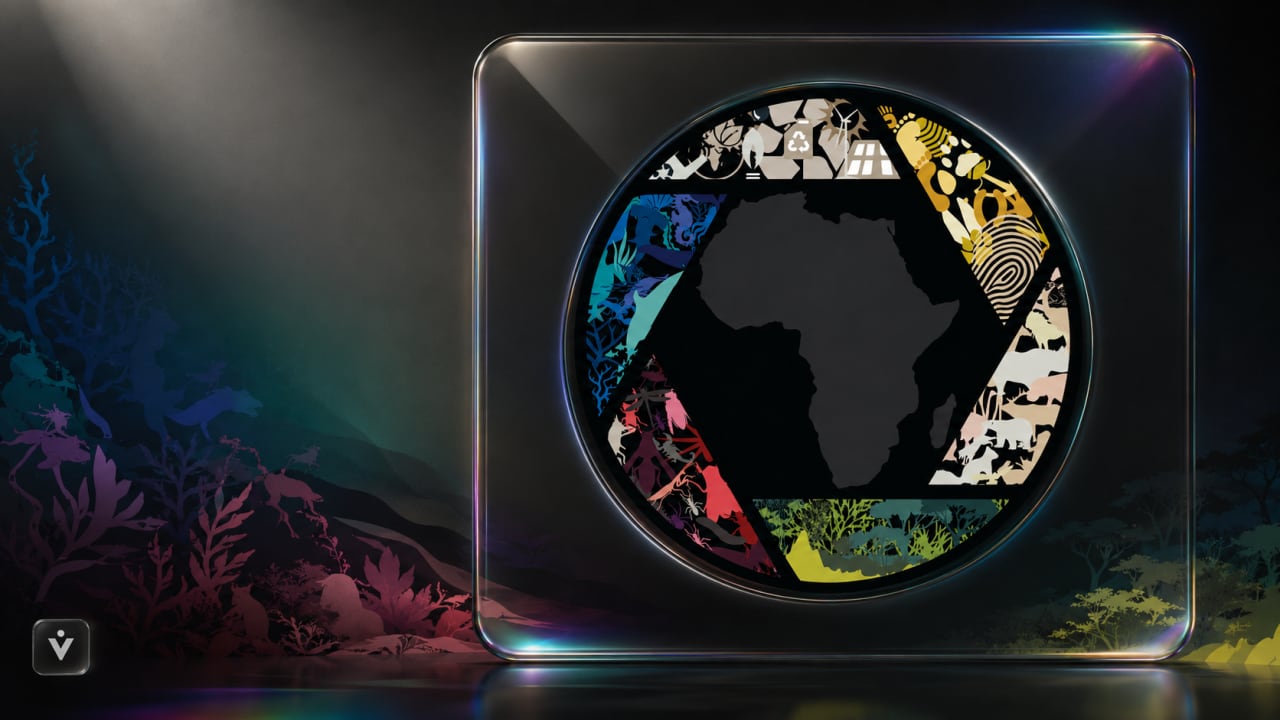
For much of international wildlife television, Africa has functioned as spectacular subject matter while African filmmakers, scientists and communities have remained less visible as authors.
NEWF—the Nature Environment and Wildlife Conservation Trust—was established by Pragna Parsotam-Kok and Noel Kok after their experience producing wildlife television exposed how few African filmmakers had access to the industry. The organisation held its first conference for African wildlife filmmakers in 2017.
The original draft described both founders as sharing the surname Parsotam-Kok. That is incorrect. They are Pragna Parsotam-Kok and Noel Kok.
NEWF’s intervention developed from a practical access problem. When the founders attempted to organise a panel on ocean filmmaking, they struggled to find African underwater filmmakers and discovered that many marine scientists had never received swimming or scuba training. NEWF consequently launched its first Dive Lab in 2019.
Its network has since grown to nearly 400 fellows drawn from 37 African countries and another 13 countries across the Global South. More than 200 divers have been trained in Sodwana Bay, while land-based wildlife-film training has also taken place at Bayala.
Through the National Geographic Society’s Africa Refocused programme, NEWF established eKhaya, a storytelling, research and diving centre in Sodwana Bay. The facility opened in November 2023 and includes an editing suite, a 3.5-metre dive pool and accommodation for fellows.
The centre was developed in partnership with Silindile “Mama Sli” Mbuyazi and built on land belonging to her grandmother. Mbuyazi, who began teaching with NEWF in 2022, has trained more than 150 fellows to dive.
NEWF’s work also extends beyond camera training. It introduced composition workshops in 2021 because wildlife stories set in African landscapes were frequently scored through musical traditions disconnected from the regions being depicted. Music created by NEWF fellows for a National Geographic film about the Okavango Delta later won best original score at the Jackson Wild festival.
Ethiopian filmmaker Elshadye Berhanu has participated in a two-month NEWF residency documenting two female cheetahs raising their cubs together, while also working on a film about Mbuyazi. Local interns at eKhaya have undertaken projects including swimming training, community work and rock-pool research.
The original claim that these interns were working on beaches from which their grandparents had been legally excluded was not supported by the reporting and has been removed.
NEWF’s significance is not simply that it diversifies a film crew. It changes who is permitted to interpret African landscapes, wildlife and conservation.
When authorship moves closer to the people who live within an ecosystem, conservation stops appearing only as an outside rescue mission. It becomes connected to local memory, labour, knowledge and ownership.
Reporting basis: Based on current reporting on NEWF’s founders, fellowship network, Dive Labs, eKhaya centre, African wildlife filmmaking training, composition workshops, National Geographic Society’s Africa Refocused programme, Silindile “Mama Sli” Mbuyazi’s role, Elshadye Berhanu’s residency work and Viranova editorial analysis of authorship in wildlife documentary storytelling.
Story index Key points, people & topics
Key points & topics
- Through fellowships, dive labs, eKhaya and Africa Refocused support, NEWF is changing who gets to tell African wildlife stories by training African filmmakers, scientists, divers, composers and conservation storytellers.
- For much of international wildlife television, Africa has functioned as spectacular subject matter while African filmmakers, scientists and communities have remained less visible as authors.
Frequently asked Answers from the desk
What is NEWF?
NEWF is the Nature Environment and Wildlife Conservation Trust, an organisation focused on training African and Global South storytellers, scientists, divers and filmmakers in nature, environment and wildlife filmmaking.
Who founded NEWF?
NEWF was founded by Pragna Parsotam-Kok and Noel Kok.
When did NEWF hold its first conference?
NEWF held its first conference for African wildlife filmmakers in 2017.
What is eKhaya?
eKhaya is NEWF’s storytelling, research and diving centre in Sodwana Bay, developed with support from National Geographic Society’s Africa Refocused programme.
Why does NEWF matter?
NEWF matters because it changes who gets to tell African wildlife and conservation stories, moving authorship closer to African filmmakers, scientists, communities and ecosystems.
Credibility & transparency How this story is reported
- Content type
- News
- Verification
- Verified — multiple sources
- Reporting basis
- Based on current reporting on NEWF’s founders, fellowship network, Dive Labs, eKhaya centre, African wildlife filmmaking training, composition workshops, National Geographic Society’s Africa Refocused programme, Silindile “Mama Sli” Mbuyazi’s role, Elshadye Berhanu’s residency work and Viranova editorial analysis of authorship in wildlife documentary storytelling.
- Sources & context
- This story is based on The Guardian reporting, National Geographic Society’s Africa Refocused information, NEWF public updates and Viranova analysis of how African wildlife storytelling changes when filmmakers, scientists, divers, composers and local communities are positioned as authors rather than background subjects.
- Primary source
- newf.co.za
Edited under our Editorial Standards and How We Report process. Spotted an error? Open the correction form below, or email corrections@viranova.co.za.
Request a correction Accuracy desk
Submit a Correction
Corrections are reviewed by editors and logged with the story record.
Human-written · Editor-reviewed · Corrections open
Filed by Viranova Editorial Desk for the Entertainment desk · Sodwana Bay, South Africa. Published 13 Jul 2026.
Leave with the sharp version of what moved.
Two considered South African culture reads a week. No feed to chase, no noise between them.
Respond to this story Reactions, comments, corrections
Respond to this story. Share a comment, a correction, or a right-of-reply — comments open once the room starts talking.