


The American alternative R&B artist has never performed in South Africa. Somehow, Johannesburg still became one of the cities listening hardest. With “Touch”, MALIA is beginning to understand what that unexpected connection could become.
There is something unusual about MALIA’s relationship with South Africa: she has never been here.
No festival appearance. No Johannesburg headline show. No Cape Town stopover. No carefully orchestrated local campaign that first introduced her music to the country.
And yet, South Africans found her anyway.
According to audience data supplied by MALIA’s team, Johannesburg has emerged as one of her strongest cities internationally, while her catalogue has surpassed 100 million streams globally. They also report more than 500,000 monthly Spotify listeners and an extraordinary surge of roughly 70,000 TikTok followers from South Africa in a matter of months.
For an independent American alternative R&B artist whose career has largely unfolded thousands of kilometres away, it is the kind of audience relationship that is difficult to manufacture.
“I’m honestly so grateful that South Africa discovered my music before I even had the chance to come there,” MALIA says. “It means so much to know that people connected with my music organically and made space for it in their lives.”
Now, “Touch” is becoming the song through which she formally turns towards that audience.
It is an intimate record — warm without becoming weightless, sensual without needing spectacle. MALIA sings from inside that suspended moment when attraction has become obvious but the relationship around it is still being discovered.
“‘Touch’ is about that feeling of being drawn to someone and allowing yourself to explore that connection,” she explains. “There’s curiosity, chemistry and a desire to take your time with someone. I wanted the song to feel intimate and honest while still leaving room for the listener to interpret it in their own way.”
That restraint is important to understanding MALIA.
Her music belongs to a corner of contemporary R&B in which the voice does not need to fight the production for attention. Instead, songs unfold gradually: guitar, space, feeling and writing that often sounds less like a performance of vulnerability than somebody thinking clearly enough to admit what they actually want.
It is also what makes her growing South African listenership particularly interesting.
South Africa is not merely consuming R&B at scale; it has become one of the genre’s most active listening markets on the continent. Spotify data reported in July showed that South Africans spent more than 8.5 billion minutes listening to R&B during 2025 — more than 142 million hours. Johannesburg, Cape Town, Pretoria, Durban and Gqeberha were identified as major centres of that listening, with people aged 18 to 24 accounting for 40.9% of the country’s R&B audience on Spotify.
That ecosystem stretches far beyond one particular interpretation of the genre. South African audiences have made space for polished pop-R&B, alternative soul, neo-soul, deeply electronic work and more traditional forms of songwriting at the same time.
MALIA appears to have entered that ecosystem organically.
Long before South Africa became central to the conversation around her current music, she had been building a career defined more by accumulation than sudden arrival.
Raised in the Pacific Northwest and now based in Los Angeles, MALIA first drew wider attention through the kind of associations that tell you something about the musical world around her. She opened for Syd of The Internet, later toured with JMSN and Corinne Bailey Rae, and was invited by Alicia Keys’ team to record a cover as part of a Spotify session celebrating the 20th anniversary of Songs in A Minor. Recent profiles have also traced more than 50 million streams to her earlier Late Bloomer and Ripe eras alone.
None of it, however, turned her into an artist chasing maximalism.
If anything, MALIA’s trajectory has made slowness part of the story.
“I’ve been a slow burn my whole life,” she told Notion earlier this year. “I’m a late bloomer.”
There is a useful contradiction there. In an industry increasingly structured around instant visibility, MALIA has built a career in which songs have been allowed to travel further than she has.
South Africa may be the clearest example yet.
Her 2026 project If I’m Being Honest extends that sense of interiority. Apple Music lists the seven-track release from 3 July, while other coverage has described it as an EP built around questions of vulnerability, attraction, boundaries, loneliness and self-understanding.
Across the project, MALIA sounds increasingly interested in the difference between wanting connection and abandoning yourself to receive it.
There are songs about leaving. Songs about standards. Songs about chemistry. Songs about learning that emotional honesty is not the same thing as emotional availability without limits.
“Touch” sits inside that world from a different angle.
Rather than dissecting what happens after intimacy fails, it lives closer to the beginning — before certainty, before definition, while two people are still learning the language of each other.
Its appeal does not depend on a dramatic climax. The tension is the point.
And perhaps that also makes it an appropriate introduction to South Africa, because MALIA’s relationship with the country is itself still somewhere near the beginning.
There has been no South African performance yet. No moment in which the digital numbers have transformed into thousands of voices singing the records back to her in the same room.
For now, there are streams, followers, comments, playlists and a city on the other side of the world appearing unexpectedly high in the data.
But digital listening has a way of becoming physical eventually.
South African audiences have repeatedly demonstrated that international R&B can become deeply local once listeners claim it for themselves. Johannesburg in particular has developed into a significant live destination for the genre alongside its streaming strength.
For MALIA, that makes what happens next more interesting than the numbers themselves.
One hundred million streams can describe scale. Half a million monthly listeners can describe reach.
Neither quite explains why someone in Johannesburg heard a song made in Los Angeles, kept returning to it and decided that the artist behind it belonged in their world.
That is the more compelling story.
MALIA has spent years making music about connection.
South Africa, without waiting for an invitation, appears to have answered.


Reporting basis: Based on audience analytics supplied by MALIA’s team; MALIA’s official Instagram, website, Spotify, YouTube and Apple Music profiles; Apple Music release metadata for “Touch” and If I’m Being Honest; BMI’s MALIA artist profile; MALIA’s 2026 interviews with Notion and GQ South Africa; Spotify South Africa R&B consumption data reported by News24; and Viranova editorial analysis of international artist discovery, alternative R&B and South African listening power.
Story index Key points, people & topics
Key points & topics
- The American alternative R&B artist has never performed in South Africa, yet Johannesburg has become her strongest listening city. With “Touch” and If I’m Being Honest, MALIA is beginning to understand what that unexpected...
Frequently asked Answers from the desk
Who is MALIA?
MALIA is an American alternative R&B and neo-soul singer-songwriter originally from the Pacific Northwest and based in Los Angeles.
Has MALIA performed in South Africa?
According to information supplied by MALIA’s team, she has not yet performed in South Africa.
Why is Johannesburg important to MALIA?
MALIA has publicly said that Johannesburg is the city where she currently has the most listeners.
How many monthly listeners does MALIA have on Spotify?
MALIA’s official Spotify profile currently shows more than 530,000 monthly listeners.
How many streams does MALIA have?
Audience data supplied by MALIA’s team says her catalogue has surpassed 100 million streams globally.
How large is MALIA’s South African TikTok audience?
MALIA’s team reports that she gained approximately 70,000 TikTok followers from South Africa within a matter of months.
When was “Touch” released?
“Touch” was released on 27 March 2026 and appears on MALIA’s If I’m Being Honest project.
What is “Touch” about?
MALIA describes “Touch” as a song about attraction, curiosity, chemistry and allowing a new connection to develop without rushing it.
When was If I’m Being Honest released?
Apple Music lists If I’m Being Honest as a seven-song release dated 3 July 2026.
Who released If I’m Being Honest?
Apple Music credits the project to Earth Tone Music.
Credibility & transparency How this story is reported
- Content type
- News
- Verification
- Official source
- Reporting basis
- Based on audience analytics supplied by MALIA’s team; MALIA’s official Instagram, website, Spotify, YouTube and Apple Music profiles; Apple Music release metadata for “Touch” and If I’m Being Honest; BMI’s MALIA artist profile; MALIA’s 2026 interviews with Notion and GQ South Africa; Spotify South Africa R&B consumption data reported by News24; and Viranova editorial analysis of international artist discovery, alternative R&B and South African listening power.
- Sources & context
- MALIA official artist channels and audience statements; Spotify artist data; Apple Music release metadata; BMI artist biography; Notion interview and profile; GQ South Africa interview; News24 reporting based on Spotify’s 2025 South African R&B data; supplied MALIA team analytics; and Viranova editorial analysis. Instagram
- Image
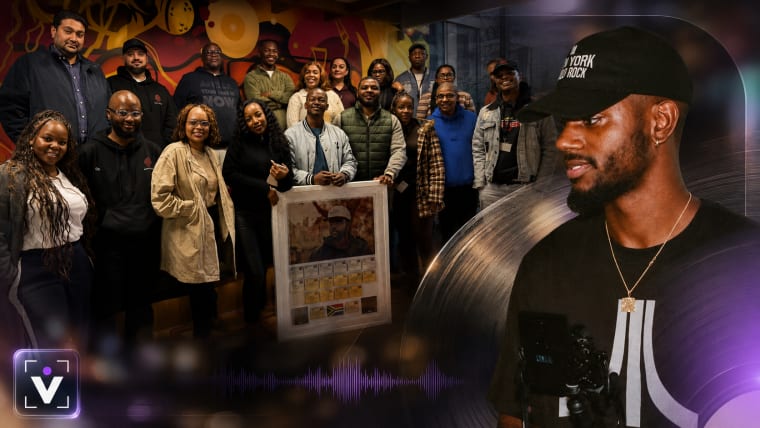
- MALIA · Supplied by I Be Music
- Primary source
- instagram.com
Edited under our Editorial Standards and How We Report process. Spotted an error? Open the correction form below, or email corrections@viranova.co.za.
Request a correction Accuracy desk
Submit a Correction
Corrections are reviewed by editors and logged with the story record.
Human-written · Editor-reviewed · Corrections open
Filed by Viranova Music Desk for the Music desk · Johannesburg, South Africa. Published 12 Aug 2026.
Respond to this story Reactions, comments, corrections
Respond to this story. Share a comment, a correction, or a right-of-reply — comments open once the room starts talking.