

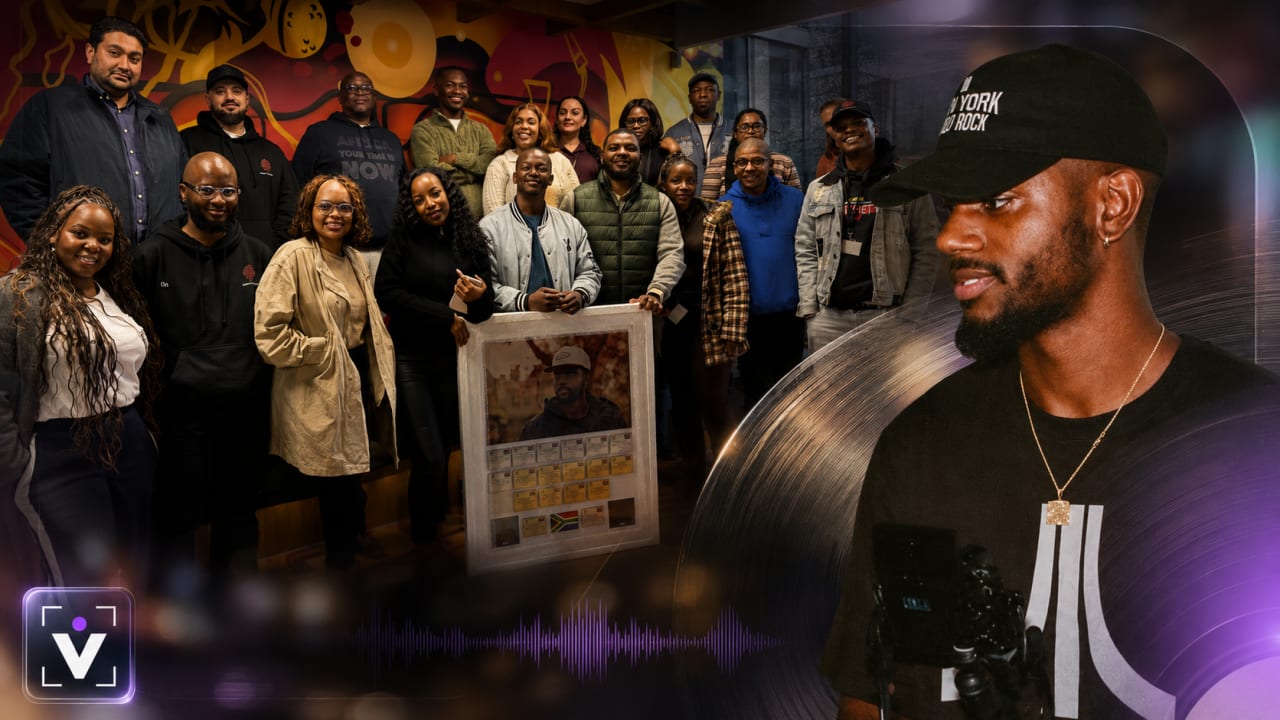
When Bryson Tiller returned to South Africa during Durban July weekend, the Recording Industry of South Africa gave his catalogue a major local endorsement: 18 new RiSA certifications across albums and singles.
The haul included Platinum status for Trapsoul, Gold for Anniversary, multi-Platinum certifications for “Don’t” and “Exchange,” and double Platinum for “Right My Wrongs.”
That certification delivery was more than a routine label moment.
It confirmed something South African R&B listeners have been proving quietly for years: 2010s trap-soul still has serious emotional and commercial weight in this market.
In South Africa, Trapsoul is not just nostalgia.
It operates like cultural memory with replay value.
That distinction matters.
Nostalgia can be passive. It can sit in the background as something people remember warmly but rarely return to with real energy. Bryson Tiller’s South African catalogue performance suggests something more active. These songs are not only being remembered. They are being replayed, streamed, quoted, sung, requested and carried into new relationship eras by listeners who have not let the emotional temperature of the music cool down.
That is why the plaques matter.
They show that a catalogue can keep working long after the global release cycle has passed.
While global pop cycles burn through new sounds at high speed, Tiller’s melancholic, late-night R&B has held a permanent place in local playlists, car rides, campus memories and relationship timelines.
Songs like “Exchange,” “Don’t,” “Right My Wrongs” and “Sorry Not Sorry” are not just catalogue records here.
They are generational mood markers.
They belong to a specific emotional language: the after-midnight apology, the half-healed relationship, the toxic callback, the campus heartbreak, the long drive, the house party comedown, the voice note you should not send, the person you still remember even when the story is over.
That is the emotional economy Tiller has carried in South Africa.
Streaming numbers show scale, but they do not always explain attachment. They can tell us that people are listening, but not why the songs still feel present. RiSA plaques give the catalogue a formal industry marker, but the deeper evidence has always been cultural.
You hear it in how quickly people recognise the opening moments.
You hear it in how naturally the records still fit into R&B sets.
You hear it in the way Trapsoul never fully left South African playlist culture.
That kind of longevity is rare.
Many international albums arrive in South Africa with global hype, dominate for a season and then fade once the next wave comes through. Trapsoul behaved differently. It became part of the country’s emotional archive, especially for listeners who came of age during the mid-2010s and built relationship memory around that sound.
That sound mattered because it was intimate without being soft in a traditional way.
It merged R&B vulnerability with trap minimalism, giving heartbreak a colder, moodier architecture. For South African listeners, that blend landed naturally inside a country already fluent in emotional music: Afro-soul, house ballads, R&B, gospel feeling, amapiano vocal melancholy and the long tradition of songs that let people dance near pain without naming it too neatly.
Tiller’s catalogue found a home in that space.
That is why his South African certification run should not be read only as foreign-star validation. It is also a story about local listening power. South African audiences can keep an international catalogue alive in ways that matter commercially. They do not simply consume what is globally current. They also decide what remains emotionally useful.
The plaques show that memory can become market behaviour.
A listener returns to an old album.
A song becomes part of a breakup again.
A track moves from one generation of students to another.
A night out reactivates a chorus.
A playlist keeps an era breathing.
Over time, all those small returns become measurable.
They become streams.
They become ticket demand.
They become certifications.
They become proof that the catalogue is still working.
This is the R&B memory economy.
It is not driven only by newness. It is driven by emotional usefulness. Songs survive because people still need them to explain something: regret, desire, distance, pride, vulnerability, confusion, unfinished love.
Bryson Tiller’s South African plaques show how powerful that economy can be.
They also show why artists and labels should pay closer attention to markets where catalogue attachment runs deep. A song may be old in release-calendar terms, but still current in feeling. An album may belong to 2015 globally, but remain present-tense in South African listening culture.
That is the real story.
Trapsoul did not simply travel to South Africa.
It stayed.
And in staying, it became part of how a generation remembers itself.
In this market, memory is not passive.
It streams, buys tickets and turns old records into present-tense revenue.
Reporting basis: Based on public reporting of Bryson Tiller’s 18 new RiSA certifications, official tour information placing him in Durban during Durban July weekend, and Viranova editorial analysis of South Africa’s R&B listening culture and catalogue economy.
Story index Key points, people & topics
Key points & topics
- Bryson Tiller’s 18 new RiSA certifications show that South African R&B listeners have kept 2010s trap-soul emotionally and commercially alive long after the original global hype cycle moved on.
- When Bryson Tiller returned to South Africa during Durban July weekend, the Recording Industry of South Africa gave his catalogue a major local endorsement: 18 new RiSA certifications across albums and singles.
Credibility & transparency How this story is reported
- Content type
- News
- Verification
- Verified — multiple sources
- Reporting basis
- Based on public reporting of Bryson Tiller’s 18 new RiSA certifications, official tour information placing him in Durban during Durban July weekend, and Viranova editorial analysis of South Africa’s R&B listening culture and catalogue economy.
- Sources & context
- This story is based on public reporting from IOL on Bryson Tiller’s RiSA certification haul and official tour information confirming his Durban appearance during July 2026. The article uses those facts to analyse the deeper replay value of 2010s trap-soul in South Africa.
Edited under our Editorial Standards and How We Report process. Spotted an error? Request a correction or email corrections@viranova.co.za.
Human-written · Editor-reviewed · Corrections open
Filed by Viranova Awards Desk for the Music desk · South Africa / Durban, South Africa. Published 09 Jul 2026.

Respond to this story Reactions, comments, corrections
Respond to this story. Share a comment, a correction, or a right-of-reply — comments open once the room starts talking.