


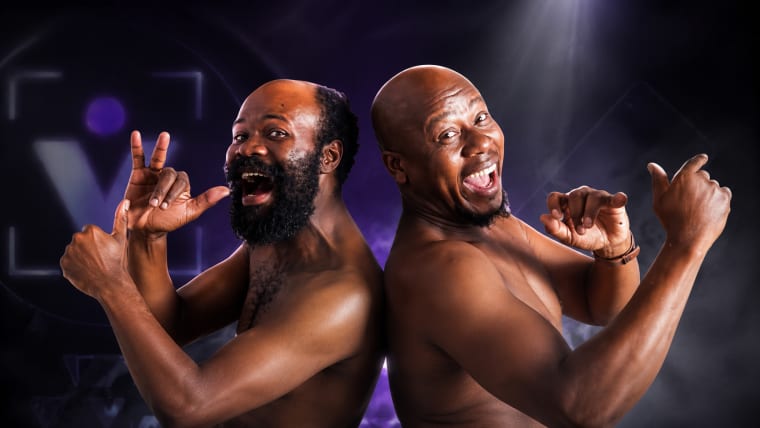
When Percy Mtwa, Mbongeni Ngema and Barney Simon first created Woza Albert! in 1981, the play became one of South Africa’s most important works of protest theatre. Its premise was simple, dangerous and unforgettable: what would happen if Morena — Jesus Christ — returned to apartheid South Africa?
In July 2026, Woza Albert! returns to the Market Theatre’s Barney Simon Theatre as part of the venue’s 50th anniversary moment, running from 15 to 26 July. The current version is performed by Hamilton Dhlamini, who also directs it, and Thulani Mtsweni.
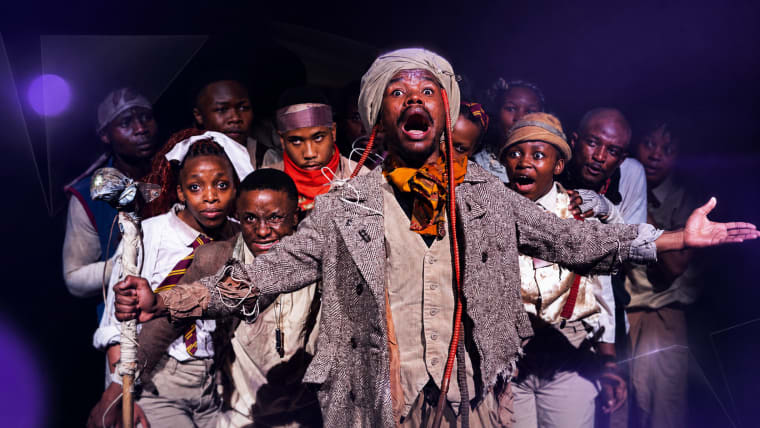
That timing gives the revival a sharper contemporary charge. The play was born as a satire of apartheid’s brutality, but its structure has always allowed it to speak beyond the exact moment of its creation. Its bare-stage urgency, quick character switches and physical theatre language make the social wound feel immediate rather than archived.
In the 1980s, Woza Albert! exposed the absurdity and violence of state-sanctioned racism. In 2026, its return lands in a country still wrestling with unemployment, inequality, corruption, municipal collapse and a deep sense of post-liberation disappointment.
That is why the revival matters. It does not ask audiences to admire protest theatre as history. It asks whether the conditions that made protest theatre necessary have really disappeared.
As long as the promises of democracy remain unfinished, Morena will always have a reason to return.
Reporting basis: Based on The Market Theatre’s official Woza Albert! revival announcement, Webtickets event information, public theatre-history context, and Viranova editorial analysis of protest theatre, post-liberation disappointment and South African cultural memory.
Story index Key points, people & topics
Key points & topics
- As Woza Albert! returns to The Market Theatre’s Barney Simon Theatre in July 2026, the protest classic asks a brutal question again: have the conditions that made protest theatre necessary really disappeared?
- Woza Albert! returns to The Market Theatre in 2026 with a sharper contemporary sting, asking whether South Africa’s unfinished democratic promises have given Morena another reason to return.
- When Percy Mtwa, Mbongeni Ngema and Barney Simon first created Woza Albert! in 1981, the play became one of South Africa’s most important works of protest theatre. Its premise was simple, dangerous and unforgettable: what...
Credibility & transparency How this story is reported
- Content type
- News
- Verification
- Verified — multiple sources
- Reporting basis
- Based on The Market Theatre’s official Woza Albert! revival announcement, Webtickets event information, public theatre-history context, and Viranova editorial analysis of protest theatre, post-liberation disappointment and South African cultural memory.
- Sources & context
- This story is based on official information from The Market Theatre and Webtickets confirming the 2026 Woza Albert! run, its original 1981 creators, the Morena premise, the Barney Simon Theatre venue, and the current performers Hamilton Dhlamini and Thulani Mtsweni.
Edited under our Editorial Standards and How We Report process. Spotted an error? Open the correction form below, or email corrections@viranova.co.za.
Request a correction Accuracy desk
Submit a Correction
Corrections are reviewed by editors and logged with the story record.
Human-written · Editor-reviewed · Corrections open
Filed by Viranova Editorial Desk for the Entertainment desk · Johannesburg, South Africa. Published 07 Jul 2026.
Respond to this story Reactions, comments, corrections
Respond to this story. Share a comment, a correction, or a right-of-reply — comments open once the room starts talking.