

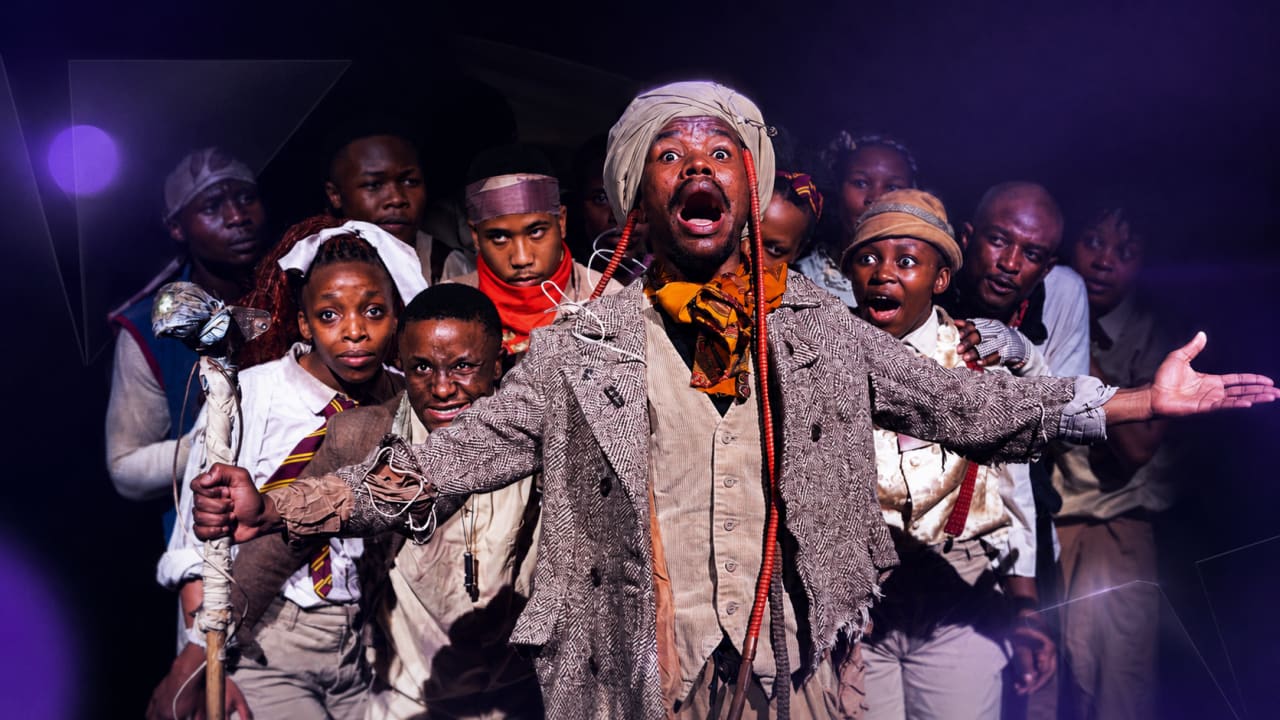
From 25 June to 5 July 2026, the 52nd National Arts Festival turned Makhanda into one of Africa’s most important creative meeting points.
Under the theme Create New Worlds Come Together, the festival brought together theatre, visual art, dance, comedy, music and performance across curated and fringe programmes.
The festival’s artistic importance is difficult to overstate.
It remains one of South Africa’s major platforms for experimentation, collaboration and public cultural debate. With Rucera Seethal serving as Artistic Director, the 2026 edition continued to position Makhanda as a space where artists can test new forms and audiences can encounter work that does not always fit neatly inside commercial entertainment.
That is the power of the National Arts Festival.
It gives artists room to risk.
It gives audiences room to be unsettled.
It gives the country a place where cultural questions can be staged, argued, danced, sung, painted and performed before they are fully resolved.
In an entertainment landscape increasingly shaped by algorithms, short attention cycles and commercial predictability, that kind of space matters. Not every important work arrives ready for the mainstream. Some work needs an audience before it has a market. Some work needs a room before it has language. Some work needs a festival because the industry around it is not yet built to understand what it is trying to become.
Makhanda has carried that role for decades.
But the festival also exists inside a difficult host-town reality.
Reports ahead of the 2026 edition again pointed to concerns about Makhanda’s infrastructure, including water, power and broader service-delivery pressures. That split screen is uncomfortable, but it cannot be ignored.
Inside the venues, artists imagine dignity, justice and new worlds.
Outside them, the town still carries the visible pressure of municipal strain.
That contradiction does not make the festival less important.
It makes the conversation around it more urgent.
The National Arts Festival remains essential, but its brilliance should not be used to hide the fragility around it. A festival can bring economic activity, cultural prestige and national attention to a town, but it cannot be expected to permanently compensate for broken infrastructure or uneven public services.
The arts economy needs stages, yes.
But it also needs functioning towns.
Reliable water.
Stable power.
Safe streets.
Accessible accommodation.
Transport systems.
Local businesses that can benefit meaningfully.
And a funding model that does not force independent artists to survive on sacrifice alone.
That last point matters deeply.
South Africa often praises artists for resilience, but resilience can become a polite word for under-support. Independent artists are expected to travel, rehearse, market, perform, document, network and recover financially from festival participation, often with limited resources and uncertain returns.
A platform can be prestigious and still be difficult to afford.
A festival can be culturally essential and still expose the economic fragility of the people who fill its stages.
That is the real split screen of Makhanda.
On one side, the National Arts Festival offers one of the country’s most important imaginative spaces.
On the other, it reminds us that imagination cannot live on applause alone.
If South Africa wants the arts to build new worlds, then the conditions around the arts have to change too. Artists need more than symbolic celebration. They need infrastructure, fairer funding pathways, better touring support, stronger provincial cultural investment and host towns capable of absorbing the pressure of major cultural events.
The 2026 National Arts Festival still mattered.
It mattered because artists gathered.
Because audiences showed up.
Because work was tested.
Because new forms entered the room.
Because Makhanda once again became a place where South Africa could think through performance.
But the festival’s brilliance should sharpen the question, not soften it.
What kind of country asks artists to imagine new worlds while the old systems around them remain so fragile?
That is the tension Makhanda held in 2026.
A festival full of possibility.
A town under pressure.
An arts economy still asking to be taken seriously beyond the stage.
Story index Key points, people & topics
Key points & topics
- The 52nd National Arts Festival turned Makhanda into a creative meeting point again, but the brilliance inside the venues sat beside a harder reality outside them: infrastructure pressure, arts funding strain and the fragile...
- The 2026 National Arts Festival turned Makhanda into a creative meeting point again, but its brilliance sat beside a harder truth: the arts economy needs functioning towns, reliable services and a funding model that does not...
- From 25 June to 5 July 2026, the 52nd National Arts Festival turned Makhanda into one of Africa’s most important creative meeting points.
Credibility & transparency How this story is reported
- Content type
- News
- Verification
- Verified — multiple sources
Edited under our Editorial Standards and How We Report process. Spotted an error? Open the correction form below, or email corrections@viranova.co.za.
Request a correction Accuracy desk
Submit a Correction
Corrections are reviewed by editors and logged with the story record.
Human-written · Editor-reviewed · Corrections open
Filed by Viranova Visual Desk for the Culture desk · Makhanda, Eastern Cape, South Africa. Published 05 Jul 2026.
Respond to this story Reactions, comments, corrections
Respond to this story. Share a comment, a correction, or a right-of-reply — comments open once the room starts talking.