


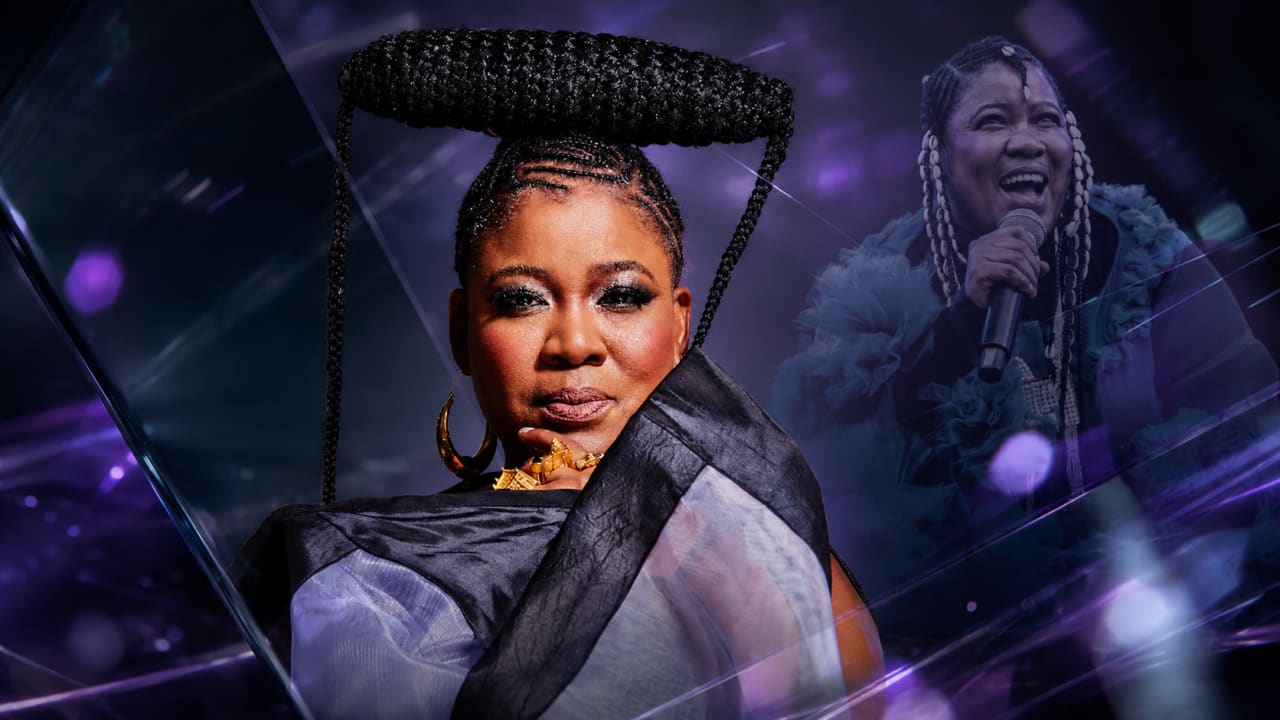
Turning 50 in 2026 did not soften Thandiswa Mazwai.
This story matters because Thandiswa Mazwai’s career shows that heritage does not have to be treated as nostalgia. Across Bongo Maffin, Zabalaza and Sankofa, she has used music to preserve African memory while challenging the political and cultural conditions that try to flatten it.
If anything, the milestone sharpened the meaning of her work.
The Sankofa Heritage Festival, staged at Carnival City on 28 February 2026, was positioned as both a celebration of Mazwai’s 50th birthday milestone and a platform dedicated to preserving and celebrating indigenous African music.
Co-headliners included Somi and Msaki, placing the event inside a broader conversation about memory, heritage and contemporary African sound.
That detail matters.
This was not simply a birthday concert enlarged into a festival.
It was a statement about what kind of musical future deserves to be built.
A future where indigenous sound is not treated as a museum object.
A future where African musical memory does not have to beg for space beside more algorithm-friendly forms.
A future where preservation can still feel urgent, stylish and politically alive.
The festival arrived after a major awards season for Sankofa.
In December 2025, Thandiswa Mazwai’s album won four South African Music Awards, adding institutional recognition to a career already defined by cultural force rather than easy commercial compromise.
The wins mattered.
But they did not suddenly validate her.
They confirmed what many listeners already knew.
Thandiswa Mazwai has spent three decades refusing to make music that behaves politely around power.
That is why “King Tha” remains such a rare figure.
Across 30 years, she has used music as both political weapon and spiritual sanctuary.
From the early kwaito-era disruption of Bongo Maffin to the solo liberation of Zabalaza and the ancestral return of Sankofa, her work has consistently looked backward in order to move forward.
That is the meaning of sankofa itself.
Return and fetch it.
Go back for what must not be lost.
Carry it into the future.
For Mazwai, that is not just an album title.
It is an artistic method.
Her music often feels like a refusal to accept that the future must arrive through forgetting.
She does not treat history as a decorative sample.
She treats it as a living material.
A wound.
A teacher.
A warning.
A source of rhythm.
A place where the present can be corrected.
That is why her work has always carried more than performance.
There is voice, yes.
There is stage command.
There is beauty.
There is charisma.
But underneath that is a more difficult force: an artist continually asking what South Africans have been taught to forget in order to appear modern.
The industry often rewards smoothness.
Clean categories.
Easy genre labels.
Songs that can travel without asking listeners to carry too much context.
Mazwai’s catalogue has rarely been interested in that kind of convenience.
Even when the music is beautiful, it does not arrive empty.
It carries language.
It carries politics.
It carries mourning.
It carries memory.
It carries the unfinished argument between liberation and the reality that followed it.
That is part of what made Bongo Maffin so disruptive.
The group emerged in a post-apartheid cultural landscape where kwaito, youth identity and new urban expression were reshaping the sound of the country.
Mazwai’s presence inside that movement was never only vocal.
It was ideological.
She brought a seriousness of purpose into popular music without draining it of energy.
She could be urgent and danceable.
Political and glamorous.
Rooted and experimental.
Accessible without surrendering complexity.
Then came Zabalaza.
Her first solo project did not simply prove that she could stand outside the group.
It announced a voice capable of carrying a wider spiritual and political architecture.
Zabalaza was liberation music without being frozen in struggle-song nostalgia.
It spoke through contemporary production, ancestral memory and personal force.
It allowed Mazwai to become not only a celebrated vocalist, but a complete artistic author.
Two decades later, Sankofa extended that authorship.
The album returned to questions of ancestry, memory and future-facing African expression, drawing from archival Xhosa material, jazz textures and broader African musical lineages.
It did not sound like an artist trying to keep up.
It sounded like an artist insisting that the race itself had been misdesigned.
That is why Mazwai’s 50th year feels significant.
Not because age automatically grants depth.
Not because longevity should be romanticised without scrutiny.
But because she has reached this point without becoming a softened symbol of her own past.
She has not allowed the industry to turn her into a heritage act in the narrow sense.
She remains active.
Difficult.
Searching.
Restless.
Still asking what freedom sounds like when the official language of freedom has become too comfortable.
At a time when the broader industry is obsessed with viral metrics, global sameness and algorithm-ready hooks, Mazwai’s commitment to indigenous memory feels radical.
She has outlived trends by refusing to become one.
That refusal is not nostalgia.
It is strategy.
Trends move quickly because they are designed to be replaced.
Memory survives because it knows how to take different forms.
Mazwai has understood that across her career.
She can stand inside a festival built around heritage without sounding trapped by the past.
She can gather artists like Somi and Msaki without reducing the event to a simple celebration of legendary status.
She can allow her birthday milestone to become a public cultural offering rather than a private victory lap.
That is the deeper force of the Sankofa Heritage Festival.
It suggests that celebration can also be responsibility.
To honour the past.
To open the stage.
To protect indigenous sound from being treated as background texture.
To make space for music that does not apologise for carrying memory.
The phrase “beautiful trouble” fits Mazwai because her work has always disturbed easy listening.
Not by rejecting beauty.
By making beauty responsible for something.
A beautiful song can still accuse.
A beautiful voice can still refuse.
A beautiful stage can still become a site of political memory.
That is the kind of trouble she has made for 30 years.
Trouble for silence.
Trouble for forgetting.
Trouble for an industry that wants African artists to become exportable by becoming less specific.
Trouble for the idea that heritage belongs behind glass.
The rebellion was never just volume.
It was preservation.
It was the insistence that indigenous African sound belongs in the present tense.
It was the refusal to treat Xhosa memory, Black womanhood, spiritual inheritance and political truth as separate rooms.
Thandiswa Mazwai did not become King Tha because she shouted the loudest.
She became King Tha because she made the room answer back.
Thirty years into the work, she is still doing that.
Not softened.
Not finished.
Not reduced to an anniversary.
Still returning.
Still carrying.
Still refusing.
Still making beautiful trouble.
Reporting basis: Based on Thandiswa Mazwai’s official Sankofa Heritage Festival information, Carnival City event details, TimesLIVE reporting on Sankofa’s four South African Music Awards, official artist biography material, Harvard Center for African Studies context on Mazwai’s career and Viranova editorial analysis of heritage, rebellion and African musical memory.
Story index Key points, people & topics
Key points & topics
- Turning 50 in 2026 did not soften Thandiswa Mazwai. If anything, the milestone sharpened the meaning of a career built on memory, rebellion and indigenous African sound.
- Thandiswa Mazwai’s Sankofa Heritage Festival marked 30 years in music and a 50th birthday milestone, but the real story is how King Tha has made preservation itself feel rebellious.
Frequently asked Answers from the desk
What was the Sankofa Heritage Festival?
The Sankofa Heritage Festival was an inaugural cultural music festival launched by Thandiswa Mazwai at Carnival City on 28 February 2026, dedicated to preserving and celebrating indigenous African music.
Where was the Sankofa Heritage Festival held?
The festival was held at Carnival City’s Big Top Arena in Gauteng.
Who headlined the Sankofa Heritage Festival?
Thandiswa Mazwai co-headlined the festival with Somi and Msaki.
What milestones did the Sankofa Heritage Festival celebrate?
The festival celebrated Thandiswa Mazwai’s 30 years in music and her 50th birthday milestone.
How many South African Music Awards did Sankofa win?
Sankofa won four South African Music Awards in December 2025.
What is Sankofa?
Sankofa is Thandiswa Mazwai’s 2024 album, rooted in memory, ancestry and future-facing African musical expression.
Why is Thandiswa Mazwai called King Tha?
“King Tha” is a widely used nickname for Thandiswa Mazwai, reflecting her stature, authority and cultural force in South African music.
Why does Thandiswa Mazwai’s career matter?
Her career matters because she has consistently used music to connect political truth, indigenous memory, Black womanhood, spirituality and contemporary African sound across three decades.
How we reported this Sources, verification & accountability
- Reporting type
- Analysis
- Verification
- Verified — multiple sources
- Reporter / responsible desk
- Viranova Music Desk
- Primary evidence
- Based on Thandiswa Mazwai’s official Sankofa Heritage Festival information, Carnival City event details, TimesLIVE reporting on Sankofa’s four South African Music Awards, official artist biography material, Harvard Center for African Studies context on Mazwai’s career and Viranova editorial analysis of heritage, rebellion and African musical memory.
- Additional verification
- This story is based on Thandiswa Mazwai’s official website, Carnival City/Sun International, TimesLIVE/TshisaLIVE, Music In Africa, Harvard Center for African Studies and Viranova analysis of Mazwai’s three-decade contribution to South African music, indigenous memory and political sound.
- Primary source
- thandiswa.com
Edited under our Editorial Standards and How We Report process. Spotted an error? Open the correction form below, or email [email protected].
Request a correction Accuracy desk
Submit a Correction
Corrections are reviewed by editors and logged with the story record.
Human-written · Editor-reviewed · Corrections open
Filed by Viranova Music Desk for the Music desk · Johannesburg, South Africa. Published 07 Jul 2026.
Leave with the sharp version of what moved.
Two considered South African culture reads a week. No feed to chase, no noise between them.
Join the conversation React or leave a thoughtful comment
How did this story land?