


Amapiano can make a newcomer appear to have arrived overnight. One week, a voice exists mainly inside specialist playlists and studio circles; the next, it seems to be coming from taxis, clubs, social feeds and several of the country’s most streamed records at once.
That appearance can be deceptive.
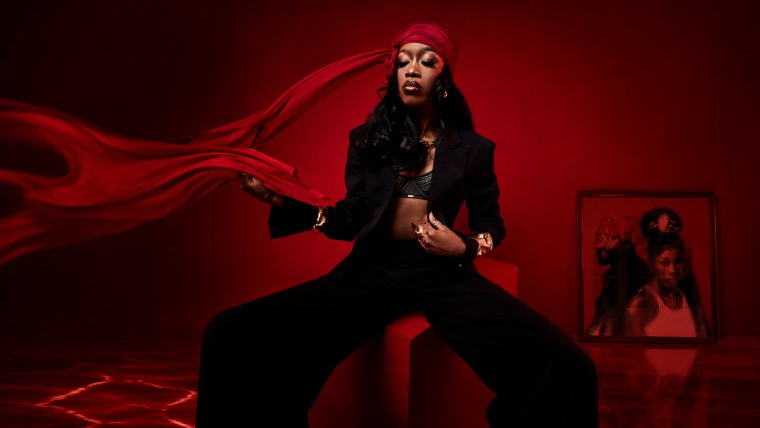
Thato Raphadi, professionally known as Thatohatsi, has not built her position through one isolated song suddenly catching fire. The Payneville, Springs-born vocalist has emerged through a network of recordings that repeatedly connects her with some of amapiano’s most visible artists and producers. Her rise is better understood as accumulation: one collaboration creating the conditions for the next, until the voice linking those songs becomes recognisable in its own right.
The chart history makes that pattern visible.
Independent Spotify tracker Kworb recorded “Abantwana Bakho” reaching number three on Spotify South Africa, “Ngyozama” number six, “Thandaza” number four, “Bo Gogo” number seven and “Iphupho” number 12. “Emhlabeni,” “Vulani,” “Amalanga,” “Bang’bonile” and “Ningikhonzele” have also entered the platform’s South African Top 200. These are not all Thatohatsi singles, nor should their success be credited to her alone. They are ensemble records involving producers, featured vocalists and established artist brands. What matters is how frequently her name and voice recur inside that successful catalogue.
The streaming total often attached to her name needs similar precision.
On 23 July 2026, Kworb estimated that Spotify tracks credited to Thatohatsi had collectively generated approximately 231.4 million streams. That is an impressive figure, but it is an independent catalogue estimate rather than an official Spotify certification or a total appearing on her public Spotify profile. The tracker classified approximately 227.2 million of those streams as coming from tracks where she was a featured artist and about 4.2 million from lead-artist appearances. It recorded no streams in its narrower solo category.
That breakdown does not weaken her achievement. It explains it.
The modern amapiano vocalist rarely develops through the old pop model of issuing a sequence of completely self-contained solo singles. The genre is built through camps, joint albums, shared production environments, extended track credits and recurring creative relationships. A singer can therefore become central to the listening culture before the public begins treating her as a conventional solo star.
Thatohatsi’s catalogue shows precisely that process.
“Abantwana Bakho” places her alongside DJ Maphorisa, Xduppy, Kabza De Small, Young Stunna and Nkosazana Daughter. “Iphupho” links her with Kabza De Small and Kelvin Momo. “Bo Gogo” and “Vulani” place her alongside Tracy within Kelvin Momo and Da Muziqal Chef’s Ntsako era, while “Amalanga” again connects Thatohatsi and Tracy, this time with Major League DJz and PYY Log Drum King.
Tracy is particularly important to understanding the network. The two vocalists recur together across songs including “Bo Gogo,” “Vulani,” “Amalanga,” “Emhlabeni,” “Ngyozama” and other ensemble recordings. That repetition creates continuity across projects that might otherwise be understood only through the names of their producers.
The result is not a deliberately engineered “siege”—there is no available evidence establishing that a strategic team plotted this precise chart formation in advance. It is an observable collaborative ecosystem. Listeners entering through one successful recording encounter multiple neighbouring tracks carrying familiar vocalists, producers and musical sensibilities.
Thatohatsi’s voice gives those connections emotional weight.
Her public Spotify biography calls her a “roaring singer” and describes her lyrics as personal, drawn from her experiences and emotions. Promotional material surrounding her collaboration with Thakzin similarly presents emotional honesty and storytelling as central to her work. Those descriptions come from artist-controlled or promotional sources rather than independent musical analysis, but they align with the quality listeners hear across many of her strongest appearances: a forceful voice that can still communicate prayer, vulnerability, longing and spiritual urgency.
Her recognition at the 2025 Backing Vocalist and Session Musicians Awards was therefore particularly fitting. Thatohatsi won the Rookie Vocalist category at an event founded by Yvonne Chaka Chaka to honour singers and instrumentalists whose contributions are frequently essential to records but less visible than those of the headline artist.
It was not quite a ceremonial passing of the baton. Careers do not transfer that neatly, and Thatohatsi’s story is still being written. But the award acknowledged the exact kind of labour through which she has become important: repeatedly entering other artists’ musical worlds and leaving an unmistakable imprint.
The next stage of her career will be about converting recognition into authorship.
Her 2026 album UHAMBO, releases such as “Izospana,” and the ShaunMusiq-assisted “Ama hem hem” increasingly place her name at the front of the record rather than deep inside an extended feature list. The most recently indexed Spotify profile also showed more than two million monthly listeners.
That transition matters. Features can introduce a voice to millions, but a lasting artist identity requires a world that audiences can identify as her own.
Thatohatsi already has the network. She has the recognition. She has a voice capable of surviving even the most crowded amapiano credit list.
The takeover will not be complete when she appears on more hits. It will be complete when audiences follow those hits back to her.

Reporting basis: Based on Kworb Spotify South Africa chart history and top-song data, Music In Africa’s artist biography for Thatohatsi, Music In Africa reporting on the 2025 Backing Vocalist and Session Music Awards, Apple Music information for UHAMBO, Spotify-indexed release information for “Ama hem hem,” public Spotify monthly-listener indexing and Viranova editorial analysis of amapiano collaboration networks.
Story index Key points, people & topics
Key points & topics
- Thato Raphadi’s rise is not the story of one sudden hit. It is the story of a voice becoming recognisable across amapiano’s most powerful collaborative circuits.
- Thatohatsi’s rise is not built on one isolated hit. Her breakthrough is the result of recurring collaborations that have made her voice increasingly recognisable across amapiano’s most successful chart networks.
- Thatohatsi’s amapiano rise is not based on one isolated hit. Her voice recurs across major Spotify South Africa charting collaborations, from “Abantwana Bakho” to “Ama hem hem.”
Frequently asked Answers from the desk
Who is Thatohatsi?
Thatohatsi is the professional name of Thato Raphadi, a South African amapiano vocalist from Payneville, Springs.
What is Thatohatsi known for?
She is known for emotive amapiano vocals, breakout song “Xolele” and repeated appearances across major collaborative amapiano records.
Which Thatohatsi songs have charted on Spotify South Africa?
Kworb has tracked songs involving Thatohatsi including “Abantwana Bakho,” “Ngyozama,” “Thandaza,” “Bo Gogo,” “Iphupho,” “Emhlabeni,” “Vulani,” “Amalanga,” “Bang’bonile” and “Ningikhonzele” on Spotify South Africa.
Did “Abantwana Bakho” reach the Spotify South Africa Top 10?
Yes. Kworb lists “Abantwana Bakho” as having peaked at number three on Spotify South Africa.
What is Thatohatsi’s relationship with Tracy?
Thatohatsi and Tracy frequently appear together across amapiano recordings, including “Bo Gogo,” “Vulani,” “Amalanga,” “Emhlabeni” and their 2026 collaborative album UHAMBO.
What is UHAMBO?
UHAMBO is a 2026 album by Thatohatsi and Tracy, listed by Apple Music as a 10-song project released on 24 April 2026.
What award did Thatohatsi win in 2025?
Thatohatsi won Best Rookie Vocalist at the 2025 Backing Vocalist and Session Music Awards.
Who founded the Backing Vocalist and Session Music Awards?
Music In Africa reports that the awards were established by Yvonne Chaka Chaka.
Why is Thatohatsi’s rise important?
Her rise shows how amapiano can build stars through recurring features, producer networks and emotional vocal identity rather than only through conventional solo singles.
What is the next challenge for Thatohatsi?
The next challenge is converting feature recognition into a fully identifiable solo or front-facing artist world.
Credibility & transparency How this story is reported
- Content type
- Analysis
- Verification
- Verified — multiple sources
- Reporting basis
- Based on Kworb Spotify South Africa chart history and top-song data, Music In Africa’s artist biography for Thatohatsi, Music In Africa reporting on the 2025 Backing Vocalist and Session Music Awards, Apple Music information for UHAMBO, Spotify-indexed release information for “Ama hem hem,” public Spotify monthly-listener indexing and Viranova editorial analysis of amapiano collaboration networks.
- Sources & context
- This story is based on Kworb, Spotify-indexed data, Apple Music, Music In Africa, The Citizen, Music Metrics Vault, public DSP track listings and Viranova analysis. Kworb figures are treated as independent tracker estimates, not official Spotify certifications.
- Image
- Thatohatsi
- Primary source
- open.spotify.com
Edited under our Editorial Standards and How We Report process. Spotted an error? Request a correction or email corrections@viranova.co.za.
Human-written · Editor-reviewed · Corrections open
Filed by Viranova Music Desk for the Music desk · Payneville, Springs, South Africa. Published 04 Aug 2026.
Respond to this story Reactions, comments, corrections
Respond to this story. Share a comment, a correction, or a right-of-reply — comments open once the room starts talking.