


Five years after its release, Amanda Black’s Mnyama offers a more useful measure of musical success: not how loudly an album arrives, but whether listeners still have reasons to return when the campaign is over.
Five years is an eternity in the attention economy.
A release can dominate a weekend and disappear by the following month. Viral moments become old references. Songs built entirely around one cultural flashpoint can suddenly sound trapped inside the year that produced them.
Amanda Black’s Mnyama has just crossed a more useful milestone.
Released on 6 August 2021, the album turned five during Women’s Month 2026. Apple Music lists it as Black’s third studio album: a 10-song, 33-minute project released through Sony Music Entertainment Africa and AfroRockstar Productions.
The anniversary has arrived alongside another measure of longevity.
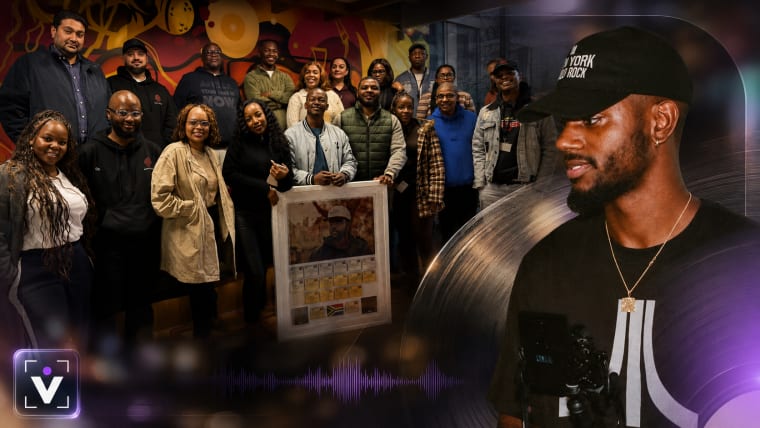
Sony Music Entertainment Africa recently celebrated Black’s catalogue surpassing 200 million streams, while also announcing that her complete catalogue now sits with the label.
It is an impressive number.
But it is not actually the most interesting reason to return to Mnyama.
Because catalogue value is ultimately about more than accumulation.
It is about return.
Amanda Black described Mnyama to Apple Music as a record shaped partly by the isolation of lockdown.
She was confronting vulnerability, financial uncertainty, emotional disconnection and the end of a relationship, allowing those experiences to move through songs concerned with heartbreak, self-doubt, survival and optimism.
That context explains why Mnyama works particularly well as a catalogue story five years later.
The record was not built around one gimmick.
Its emotional world is made up of situations listeners can encounter repeatedly across their own lives: loneliness, recovery, romantic uncertainty, family, the struggle to get out of bed and the decision to keep going anyway.
Those things do not expire when a promotional cycle ends.
What 200 Million Streams Can — and Cannot — Tell Us
There is an obvious temptation to make the 200-million-stream milestone the headline argument.
Numbers offer certainty.
They translate an artist’s career into something immediately legible: bigger than this, more successful than that, streamed this many times.
And in this case, the number matters.
Two hundred million streams across a catalogue speaks to reach, repeat listening and an audience relationship that has continued well beyond Amanda Black’s arrival a decade ago.
But even that figure cannot fully explain why music lasts.
Streaming totals tell us that listening happened.
They cannot always tell us why somebody came back.
That distinction matters when talking about catalogue.
Marketing can create awareness.
A campaign can make somebody press play once.
The long-term relationship begins when listeners decide to return without being asked.
The Difference Between a Release and a Catalogue
A release moment is loud by design.
There are announcements, interviews, social campaigns, playlist placements, launch events and the compressed urgency of convincing an audience that something matters now.
Catalogue value accumulates differently.
Quietly.
A song reappears in someone’s life three years later.
An album that originally accompanied heartbreak becomes associated with recovery.
A track discovered late carries none of the promotional context surrounding its original release but still finds an audience because the feeling inside it remains recognisable.
That is the transformation from release into catalogue.
The music stops belonging exclusively to the moment in which it arrived.
Mnyama has now had enough distance from 2021 for that transformation to become visible.
Five years later, it can be heard outside the urgency of its original campaign.
The question is no longer simply whether it performed when it was released.
There is a better one.
What did it leave behind?
Vulnerability Has Always Been Amanda Black’s Advantage
Part of the answer sits in the emotional language Black has built her music around.
Her strength has rarely come from pretending that difficult experiences have simple resolutions.
On Mnyama, uncertainty is allowed to remain uncertain.
There is heartbreak, but also survival.
There is darkness, but not surrender.
There is anxiety alongside optimism.
That emotional openness gives the record somewhere to go after the autobiographical circumstances that created it have passed.
Listeners do not need to have experienced Amanda Black’s exact version of 2020 or 2021 to recognise the feelings inside it.
They only need to know what it means to lose certainty.
Or to feel alone.
Or to have to convince themselves that continuing is still possible.
That is where personal music becomes communal.
And it is one reason vulnerability can have a much longer cultural life than whatever happens to be fashionable during release week.
Catalogue Is the Quieter Measure
The contemporary music industry gives us endless ways to measure arrival.
First-day streams.
Chart positions.
Playlist additions.
Views.
Trending placements.
Viral sounds.
They are useful indicators of attention.
But attention and attachment are not the same thing.
Five years after Mnyama, Amanda Black now has a 200-million-stream catalogue milestone that provides an unusually neat demonstration of that difference.
The number tells us that people have listened.
The more interesting story is that they continued listening.
For an artist whose strongest material has consistently used personal vulnerability as a route towards collective feeling, that may be the more meaningful metric.
Not how much noise the music generated when it arrived.
How much of it remained after the noise moved somewhere else.

Reporting basis: Based on Apple Music’s official Mnyama album page and Amanda Black’s track-by-track commentary; current first-party Sony Music Entertainment Africa material concerning the fifth anniversary and catalogue relationship; Daily Sun’s reporting from Sony’s Amanda Black milestone celebration, including direct comments from Black; Amanda Black’s official YouTube catalogue; and Viranova editorial analysis of catalogue longevity, emotional attachment and the difference between release-cycle attention and enduring listening behaviour.
Story index Key points, people & topics
Key points & topics
- Five years after its release, Amanda Black’s Mnyama offers a more meaningful measure of musical success: not how loudly an album arrives, but whether listeners still have reasons to return when the campaign is over.
- Five years after Mnyama, Amanda Black’s third studio album can finally be judged outside the urgency of its original release campaign. Its endurance makes a stronger argument for catalogue value than any single week of noise...
Credibility & transparency How this story is reported
- Content type
- News
- Verification
- Verified — multiple sources
- Reporting basis
- Based on Apple Music’s official Mnyama album page and Amanda Black’s track-by-track commentary; current first-party Sony Music Entertainment Africa material concerning the fifth anniversary and catalogue relationship; Daily Sun’s reporting from Sony’s Amanda Black milestone celebration, including direct comments from Black; Amanda Black’s official YouTube catalogue; and Viranova editorial analysis of catalogue longevity, emotional attachment and the difference between release-cycle attention and enduring listening behaviour.
- Sources & context
- Apple Music — Mnyama Primary album metadata and first-person creative context. Confirms the 6 August 2021 release, 10 tracks, 33-minute runtime, third-album designation and Sony Music Entertainment Africa/AfroRockstar credit. It also contains Amanda Black’s own explanation of the lockdown isolation, breakup, financial anxiety, self-doubt and healing that shaped the record. Sony Music Entertainment Africa First-party label material marking five years of Mnyama and explicitly stating that Amanda Black’s full catalogue now calls Sony Music Entertainment Africa home. Daily Sun Reported from the Sony celebration that Amanda Black had reached 200 million catalogue streams and quoted Black directly reflecting on the milestone and what sustained listening means to her. Amanda Black official YouTube Official artist channel containing Mnyama-era material and official album audio, providing an additional first-party music source.
- Image
- Mnyama · Amanda Black
- Primary source
- facebook.com
Edited under our Editorial Standards and How We Report process. Spotted an error? Open the correction form below, or email corrections@viranova.co.za.
Request a correction Accuracy desk
Submit a Correction
Corrections are reviewed by editors and logged with the story record.
Human-written · Editor-reviewed · Corrections open
Filed by Viranova Music Desk for the Music desk · South Africa. Published 11 Aug 2026.
Respond to this story Reactions, comments, corrections
Respond to this story. Share a comment, a correction, or a right-of-reply — comments open once the room starts talking.