

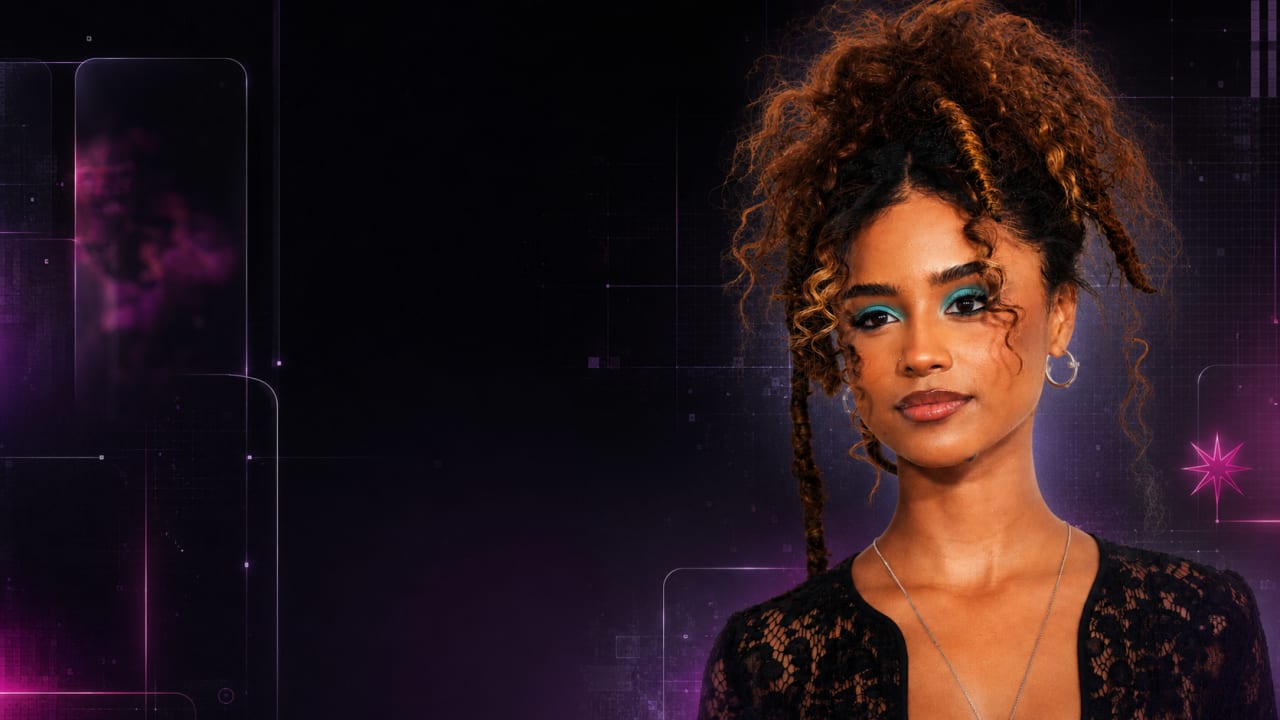
The internet moves at a speed that does not always care about truth.
That is a lesson global pop stars either master early or get swallowed by.
On 7 July 2026, South African Grammy winner Tyla became the latest target of the viral misinformation machine when online accounts began circulating claims that she had signed with Jay-Z’s Roc Nation. Within hours, fan pages, pop-culture accounts and entertainment pages had turned an unverified rumour into a confident announcement.
The rumour had all the ingredients needed to travel fast.
A global star.
A major entertainment company.
A powerful name attached to it.
A supposed career-shifting deal.
A fanbase hungry for the next chapter.
That is how the digital echo works now. It does not wait for confirmation. It rewards the post that feels exciting enough to share before anyone asks whether it is true.
Tyla did not let the story breathe for long.
Instead of issuing a heavy corporate statement, she used her Instagram Story to shut it down with precision: “I’m not signed to Roc Nation. But my album A*POP drops 24/7 (24 JULY 2026).”
One sentence.
Two functions.
Correction and redirection.
That is what made the response so effective. Tyla did not only deny the rumour. She used the attention already gathered by the false story and pushed it back toward the project she actually wanted people discussing.
That is digital control.
Not panic.
Not over-explaining.
Not giving the rumour a full press-cycle oxygen tank.
Just a clean interruption of the lie, followed by a reminder of the real campaign.
The moment follows another recent online flare-up in which a viral clip falsely claimed that Tyla had streamer N3on removed from a celebrity dinner in Monaco. That incident was later widely reported as a case of mistaken identity, with the woman in the clip not being Tyla.
Taken together, these moments show the strange pressure surrounding modern celebrity.
A pop star no longer has to be physically present in a situation to become part of the story. A caption can drag them in. A fan account can misidentify them. A screenshot can invent a deal. A fake visual can move faster than a correction. The grid does not need evidence to produce momentum.
That is the danger.
But Tyla’s handling of the Roc Nation rumour shows she understands the difference between noise and signal.
Noise is the false signing claim.
Signal is A*POP.
Noise is the social-media scramble.
Signal is the release date.
Noise is the rumour machine trying to decide her career for her.
Signal is the artist speaking directly to her audience.
That distinction matters because Tyla is not just managing a local fanbase anymore. She is operating inside a global pop economy where every post can be interpreted, clipped, translated, exaggerated and turned into evidence by people who were never in the room.
The bigger an artist becomes, the more the internet tries to create parallel narratives around them.
Who signed them.
Who dropped them.
Who they argued with.
Who they avoided.
Who they copied.
Who they replaced.
Who they are becoming.
For a South African artist moving through global pop at Tyla’s level, that pressure is even sharper. Every career movement becomes symbolic. Every rumour becomes a referendum on African pop’s global future. Every supposed deal is read as proof that the world is finally paying attention.
That is why misinformation can be so seductive.
People wanted the Roc Nation story to be true because it sounded like acceleration. It sounded like validation. It sounded like a global power move. But wanting something to be true does not make it true, and Tyla’s response reminded the timeline that excitement is not evidence.
What makes her approach effective is her refusal to overfeed the rumour cycle.
She does not give every internet fabrication the dignity of a formal press conference. She uses direct-to-fan infrastructure, corrects the lie and turns the attention economy back toward the music.
That is the modern pop skill.
The artist has to know when to speak.
How much to say.
Where to say it.
And how to exit the rumour before it becomes the headline of the era.
Tyla’s Instagram Story worked because it was fast enough for the platform, clear enough for the fans and useful enough for the rollout. It did not sound like crisis management. It sounded like an artist refusing to let the grid misfile her story.
In an era of fake quote cards, deepfake-adjacent confusion, stan-page speculation and algorithmic outrage, the modern pop star cannot wait for traditional media to clean up the mess.
By the time a correction article lands, the falsehood may already have produced thousands of posts, reaction videos, fan theories and rewritten biographies.
That is why direct artist communication has become part of the infrastructure of fame.
The Instagram Story is not just casual.
The caption is not just casual.
The quote-post is not just casual.
These are now tools of narrative defence.
Tyla understands that.
She corrected the record without sounding defensive. She protected the campaign without sounding corporate. She let the rumour collapse under the weight of her own clarity.
And then she pointed everyone back to A*POP.
That is the part that should not be missed.
The correction was not the destination.
The music was.
You either command the grid, or the grid writes your narrative for you.
On 7 July, Tyla chose command.
Reporting basis: Based on Tyla’s Instagram Story as reported by credible entertainment outlets, public reporting on the Roc Nation rumour, public reporting on the earlier N3on mistaken-identity incident, and Viranova editorial analysis.
Story index Key points, people & topics
Key points & topics
- After online rumours falsely claimed she had signed with Roc Nation, Tyla corrected the record in one Instagram Story — then redirected the attention economy back to A*POP.
- Tyla’s Roc Nation rumour response was more than a denial. In one Instagram Story, she corrected the lie, refused to feed the noise and turned the attention back to A*POP.
- Tyla denied Roc Nation signing rumours on Instagram and redirected attention to A*POP, showing how modern pop stars control misinformation and digital narratives.
Credibility & transparency How this story is reported
- Content type
- News
- Verification
- Verified — multiple sources
- Reporting basis
- Based on Tyla’s Instagram Story as reported by credible entertainment outlets, public reporting on the Roc Nation rumour, public reporting on the earlier N3on mistaken-identity incident, and Viranova editorial analysis.
- Sources & context
- This story is based on public reporting from IOL, SlikourOnLife, BellaNaija and Times of India, alongside Viranova’s analysis of celebrity misinformation, direct-to-fan communication and digital pop-era narrative control.
Edited under our Editorial Standards and How We Report process. Spotted an error? Request a correction or email corrections@viranova.co.za.
Human-written · Editor-reviewed · Corrections open
Filed by Viranova Music Desk for the Music desk · South Africa / Global. Published 07 Jul 2026.

Respond to this story Reactions, comments, corrections
Respond to this story. Share a comment, a correction, or a right-of-reply — comments open once the room starts talking.